


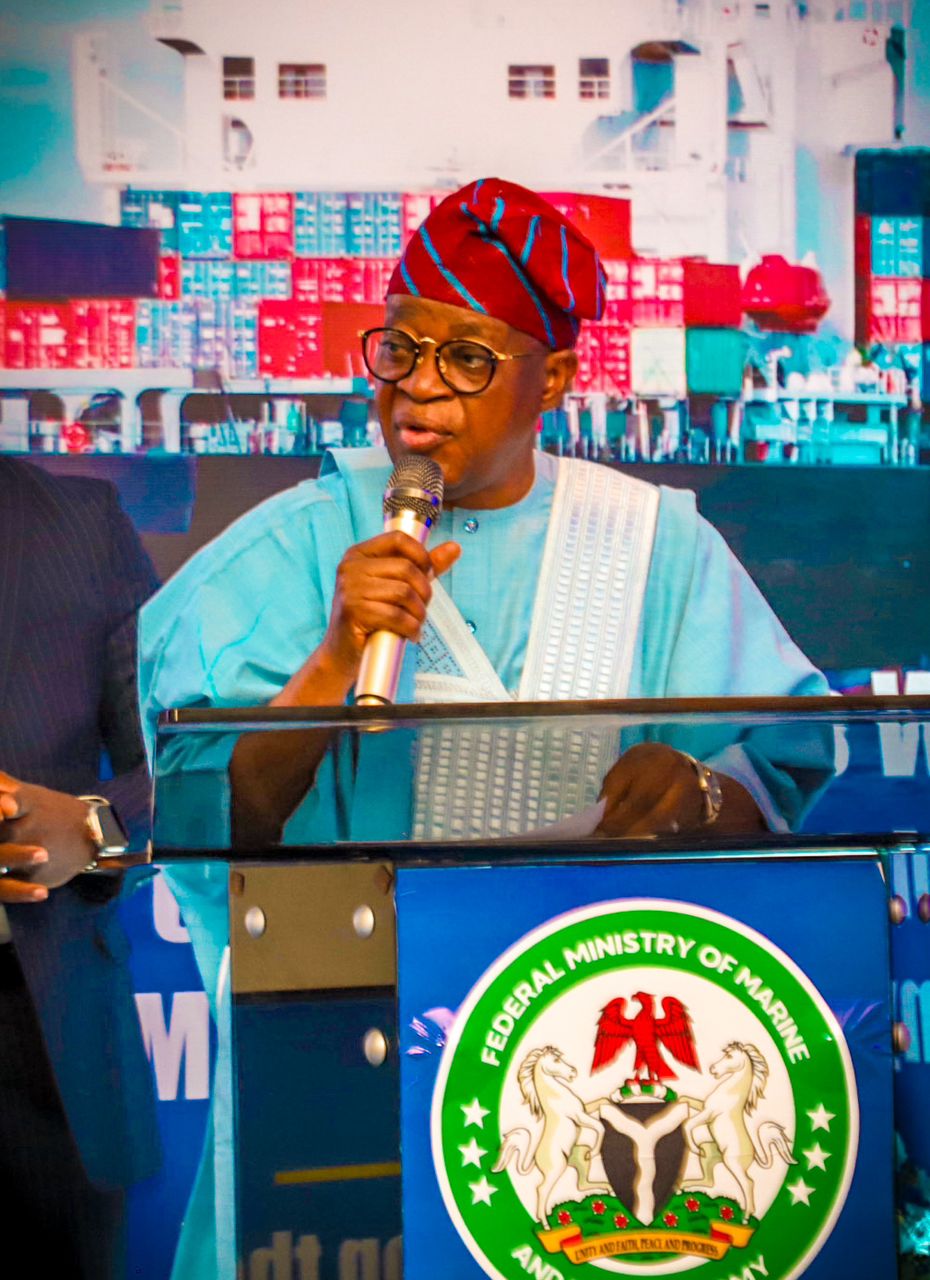

Minister of Marine and Blue Economy, Adegboyega Oyetola has called for increased funding to drive the Ministry’s 2025 budget.
The proposed total capital budget for the ministry in 2025 is N11.77 billion, alongside an overhead allocation of N453.86 million.
Addressing the Joint Committee of the Senate on Marine Transport and the House of Representatives Committees on Ports and Harbour, Maritime Safety, Education, Administration, Inland Waterways, and Shipping Services, Oyetola noted that the figures are inadequate, just as he appealed to the committees to consider the ministry’s compelling need for additional funding to drive its mandate

He emphasized the need for robust investments in maritime safety, fisheries, and port infrastructure to address critical gaps in the sector.
On fisheries and aquaculture, the minister outlined projects aimed at boosting fish production to support food security and economic growth. These initiatives, he said, are tied to government capital budgets for swift delivery.
The 2025 budget, tagged ‘Budget of Restoration: Securing Peace, Rebuilding Prosperity,’ is focused on consolidating achievements and addressing deficiencies such as decayed infrastructure, silted river courses, inadequate fish production, and unsafe watercraft,” the minister stated.
“Appropriation of the Fisheries and Aquaculture Department. However, in the 2025 Budget proposal, the Ministry is initiating major projects in the fisheries and aquaculture subsector to boost fish production. These projects are deliberately tied to governments’ capital budgets to guarantee fast-tracked delivery and assured food security.
“Quantum investment through the capital budget is necessary for the Ministry to deliver on its lofty mandate and potential. Greater budgetary provision is therefore advocated.
The proposed total Capital Budget of N11,770,533,003 (Eleven Billion, Seven Hundred and Seventy Million, Five Hundred and Thirty-three Thousand, Three Naira) and Overhead of N453,856,327 (Four Hundred and Fifty-three Million, Eight Hundred and Fifty-six Thousand, Three hundred and Twenty- seven Naira) though inadequate is for your kind consideration,”
He noted that three agencies under the ministry the Nigerian Ports Authority (NPA), Nigerian Maritime Administration and Safety Agency (NIMASA), and Nigerian Shippers’ Council (NSC) are fully self-funding, contributing significantly to the Consolidated Revenue Fund.
However, he stressed the need for improved financial support for agencies like the National Inland Waterways Authority (NIWA), Maritime Academy of Nigeria, and the Fisheries and Aquaculture Department to achieve the ministry’s goals.
Oyetola disclosed plans to enhance safety on inland waterways, citing the rising number of boat mishaps due to increased waterway traffic. He said that the ministry intends to distribute life jackets to riverine communities, replace dilapidated wooden boats with standardized crafts, and undertake capital dredging at strategic river locations in 2025.
The minister also highlighted ongoing projects, including the development of dry ports in Ijebu-Ode, Ogun State, and Moniya, Oyo State, aimed at decongesting the Western Port System. “Design consultancies for these projects are ongoing, and we are targeting fast-track delivery,” he noted.
Oyetola celebrated key milestones achieved in 2024, including the finalization of Nigeria’s National Blue Economy Strategy, Fisheries and Aquaculture Policy, and a Strategic Roadmap for the Blue Economy. These foundational documents, he said, provide a sound policy framework for the ministry’s operations.
Oyetola commended the legislature’s past support and urged continued cooperation to ensure the ministry fulfils its potential. “I sincerely count on your understanding and support as we set up enduring structures to maximize the full potential of Nigeria’s blue economy,” he appealed.
More to read
Omi Eko: Management clarifies project implementation process
Customs intercepts N3.67bn cannabis-infused cookies, gummies from Canada at Tin Can port
Navy uncovers 40,000 litres of suspected crude oil in Delta