


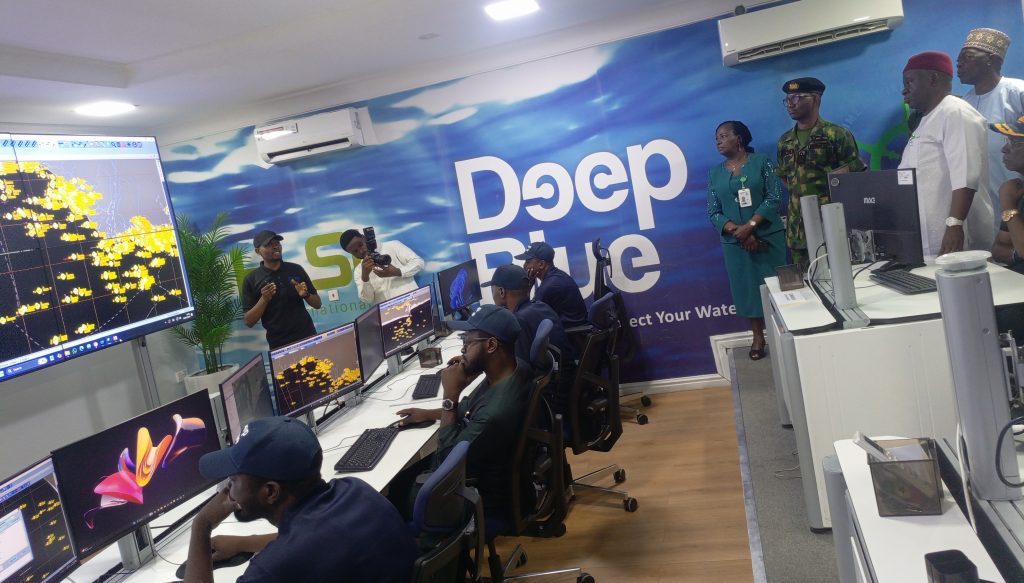

The Command, Control, Communications, Computers and Intelligence (C4i) centre of the Nigerian Maritime Administration and Safety Agency ( NIMASA) has revealed a startling number of vessels engaging in illicit activities within Nigeria’s Exclusive Economic Zone ( EEZ).
According to the C4i centre, a total of 1,723 vessels conducted dark activities, which include turning off their Automatic Identification System (AIS) between January 2024 and January 2025.
The C4i centre, a critical component of the Deep Blue project and domiciled within NIMASA, operates with contributions from various security agencies, including the Nigerian Navy, Nigerian Air Force, Nigerian Army, the Nigerian Police, and the Department of State Services.
It is responsible for monitoring vessels entering Nigerian waters using an intelligence system designed to detect any suspicious activity.
The supervisor of the C4i operation centre, Abdulrasak Lawal disclosed these findings recently during an oversight visit by the House Committee on Maritime Safety, Education and Administration to the Nigerian Maritime Resource Development Centre (NMRDC) in Lagos.
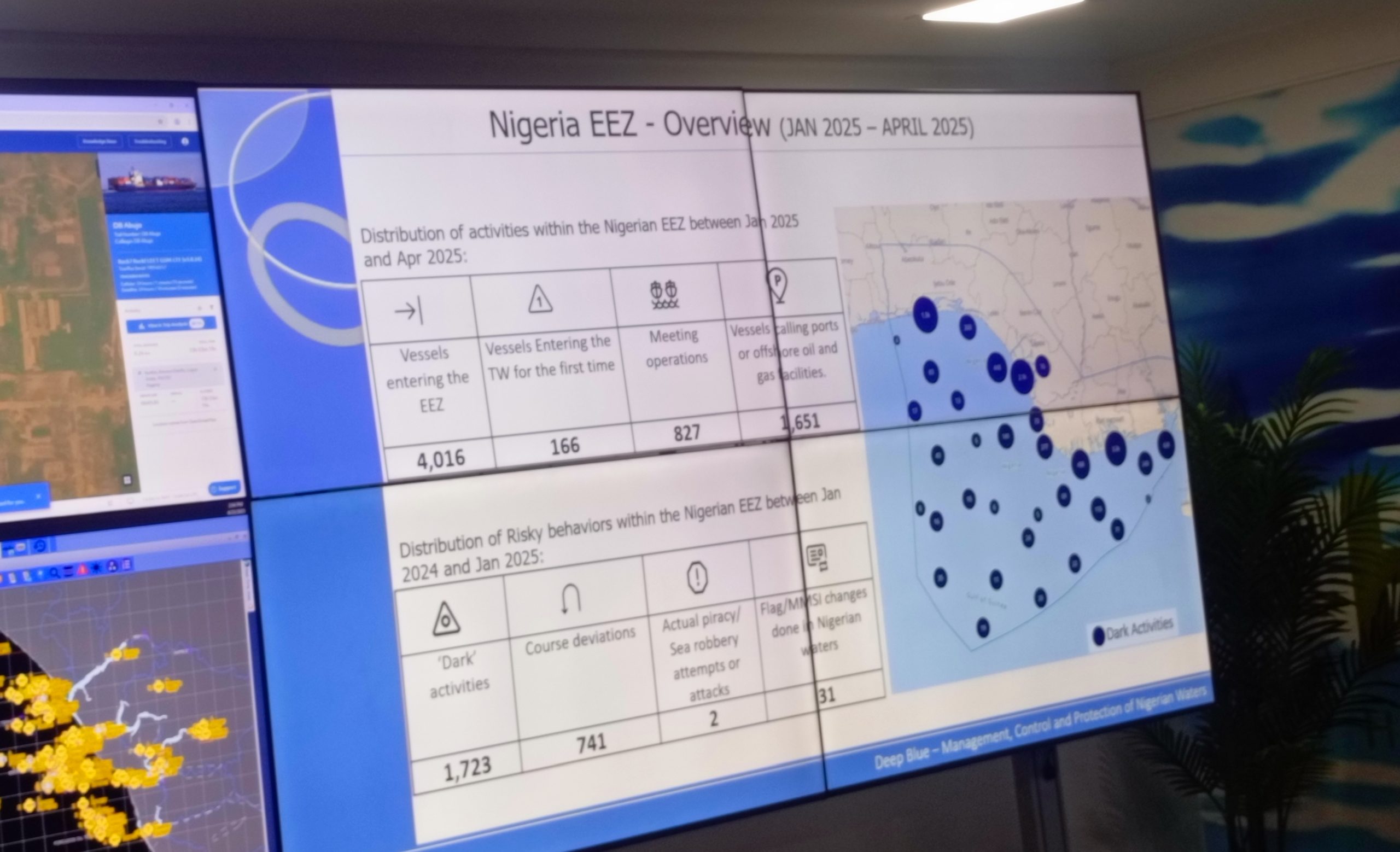
He explained that the system tracks the history of vessels, including their voyages and flags any questionable activities for further investigation. These activities, he said, include sharp practices, and the deliberate switching off of the AIS among others.
Lawal said some of the vessels uncovered are suspected to have been engaged in illegal fishing, illegal bunkering, oil theft and dumping of harmful waste in the nation’s waters.
“These vessels, when they sail into our waters, turn off their transmission, and once they do that, you’re not able to track them. Once you are unable to track vessels operating on your waters, there are so many reasons associated with it. We have so many vessels coming for illegal bunkering, illegal fishing, dumping of harmful waste- they are part of the 1723 vessels conducting dark activities.
He added, “Immediately a vessel goes dark, we dispatch one of our aerial assets above that particular vessel to ascertain it’s activities at that moment. Because once a vessel goes dark, it is a crime on its own, and we even have the power to detain any vessel that is conducting dark activities.”
Lawal also highlighted the significant volume of maritime traffic within Nigeria’s waters, which he said accounts for 47 percent of vessel traffic in the Gulf of Guinea with 33,530 port calls recorded between January and April 2025.
This, he said, is against figures from countries within the GoG like Ghana with 4,969 port calls, Gabon- 2,753, Equatorial Guinea- 2,196, Benin- 996, Liberia- 711, and Gambia with 328 port calls within the review period.
The high volume of traffic, Lawal noted increases the potential for illegal activities and attack on vessels adding that as a member of the GoG, the International Maritime Organization ( IMO) holds Nigeria accountable for ensuring security of vessels in its maritime domain.
Lawal disclosed further that a total of 4,016 different vessels entered Nigeria’s EEZ between January and April 2025,
with 166 of them entering for the first time.
Despite the challenges posed by these dark activities, Lawal said the C4i centre of the deep blue project has been instrumental not only in identifying suspicious vessels but also in maintaining a record of zero piracy incidents in Nigeria waters for over one year.
More to read
Again, Customs seizes 204 pump-action rifles hidden in household goods at Tin Can port
Maritime agencies’ revenue jumps 160% to N1. 83tr in 2025 – Oyetola
Nigerian Navy, Turkiye deepen defense partnership, advance fleet modernisation