



The Chartered Institute of Logistics and Transport (CILT), has called for significant investment in logistics infrastructure to fully exploit the potentials of the blue economy and elevate Nigeria’s performance on the global stage.
President of CILT, Nigeria, Barr. Mfon Usoro made the call in Lagos on Wednesday during the Institute 2025 annual conference with the theme “Enhancing Logistics & Transport for Sustainable Blue Economy”.
Lamenting the nation’s poor ranking on the World Bank’s Logistics Performance Index (LPI) Usoro pointed that Nigeria ranks a dismal 81 out of 141 countries, emphasizing the need for improvement.

She said, “I’m sure you all read about the Logistics Performance Index, which is a World Bank tool in measuring the logistic challenges of countries all over the world that are coastal states that have ports. Nigeria was 81 on that list. We ranked below the smallest African country,”
“And that is not where we want to be. We want to be among the best 10, best 12 in the world. And we can achieve that if we invest in logistics infrastructure.”
Usoro stressed that development efforts must not focus on just building ports, but on the entire logistics and supply chain ecosystem.
She called for immediate, inter-agency integration, maintaining that the Nigeria Customs Service, the NPA, and terminal operators must all key into same method of automation to ensure seamless cargo clearance.
“For countries to develop and be judged by the industry as performing well in logistics, they must pay attention to all the critical aspects that forms the logistics and supply chain ecosystem. It’s not just about building ports.
“For instance, ports logistics, which is about efficiency immediately includes the Nigeria Customs Service because the ease of clearance of cargo for import and for export are mainly within the purview of the customs. That means that the customs must have a buy-in, which I believe they do. And the automation, which they have been planning to roll out, has to be integrated so that not just the customs but all the other agencies, including the terminal operators, the port authority, all key in to that same method of automation.
“So you don’t have to clear with the terminal operator, and then NPA centrally, and then the customs directly. It is interlinked. That is what we are emphasizing, ” she said.
Mfon also urged the government to fill the newly created directorate-level transport officer roles with skilled experts in logistics and supply chain management to address the manpower deficit.
In his address, Minister of Marine and Blue Economy, Adegboyega Oyetola who was represented by the Managing Director of Nigerian Ports Authority ( NPA) Abubakar Dantsoho noted that the promise of a thriving blue economy cannot be realised without a robust, efficient, and integrated logistics and transport system.
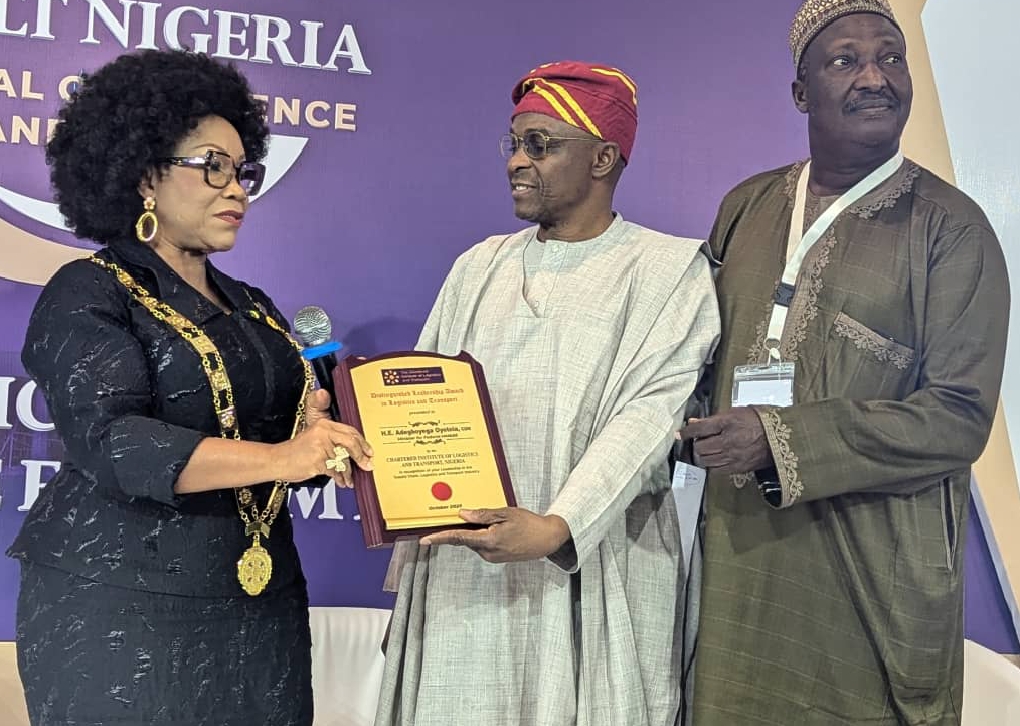
While highlighting efforts of the ministry to improve logistics performance and competitiveness in the marine and transport sector, Oyetola said the government has commenced procurement process for modernisation projects at ports outside Lagos to ensure balanced development across our maritime gateways.
This initiative, he said is designed to upgrade infrastructure, improve cargo handling, and expand capacity to meet global standards.
“We are working closely with all stakeholders to achieve a paperless, technology-driven port environment that enhances efficiency, reduces turnaround time, and curbs corruption. As part of this commitment, the Federal Government has approved a one billion US dollar modernisation project for the ports in Lagos.
“These efforts reflect the administration’s firm determination to improve logistics performance and competitiveness in the marine and transport sector, making Nigeria a preferred destination for maritime trade and investment, ” he said.
The minister commended CIILT for its leadership in promoting professionalism, knowledge, and ethical standards, urging its members to continue to champion the adoption of smart and green transport technologies; promote capacity building for young professionals and operators.
“As professionals, your expertise and innovations are indispensable to the success of the Blue Economy. Whether through port operations, freight forwarding, warehousing, distribution, fleet management, or intermodal integration, your contribution defines the efficiency and competitiveness of our entire economic ecosystem.
“I therefore urge CILT and its members to continue to champion the adoption of smart and green transport technologies; promote capacity building for young professionals and operators; advocate for data-driven planning and decision-making in logistics management; and deepen collaboration with the Ministry and other stakeholders to align your expertise with national priorities.
Our goal is not growth for growth’s sake, but sustainable and inclusive growth —one that balances economic opportunity with environmental stewardship and social equity.
“We must ensure that our coastal and riverine communities benefit from the emerging Blue Economy, that women and youth find meaningful employment within its value chains, and that our maritime and transport infrastructure is developed in harmony with global climate goals, ” he said.
Oyetola assured that the Ministry remains fully committed to partnering with CILT and all stakeholders to advance shared objectives to build a logistics and transport system that is efficient, sustainable, and globally competitive.
Photo caption:
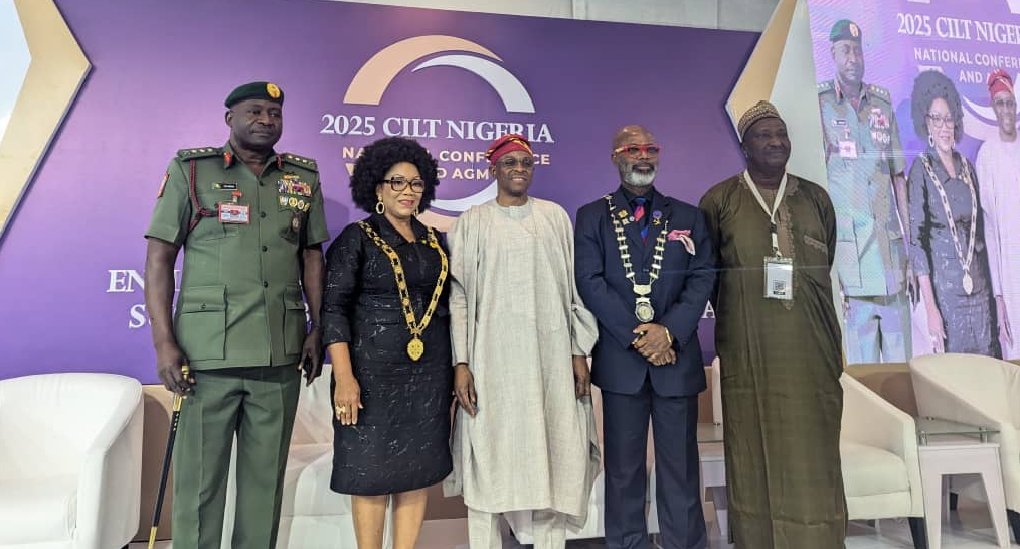
L-R: Chief of Defense Staff, Major General Christopher Musa; President of CILT, Nigeria, Barr. Mfon Usoro; Managing Director, Nigerian Ports Authority ( NPA) Abubakar Dantsoho, President, CILT International, Teete Owusu-Nortey and a guest at the CILT 2025 Conference and AGM in Lagos on Wednesday.
More to read
Omi Eko: Management clarifies project implementation process
Customs intercepts N3.67bn cannabis-infused cookies, gummies from Canada at Tin Can port
Navy uncovers 40,000 litres of suspected crude oil in Delta