


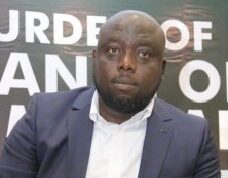

The Alumni of the Maritime Academy of Nigeria (MAN) Oron, AMANO has warned that converting the institution into a conventional university will undermine the specialized skills vital for the growth of the nation’s marine and blue economy.
Speaking in a virtual interview with select maritime journalists, AMANO President, Emmanuel Maiguwa stated that the fresh conversion push by Oron community would distort the professionalism of the institution, adding that the success of the blue economy hinges on competency, that is already in short supply.
Maiguwa who expressed the Alumni’s full support to the academy’s Governing Council in rejecting the conversion, stressed that AMANO’s interest is purely to guarantee competent and skillful manpower to help Nigeria achieve its blue economy objectives.

He questioned the sincerity of the government’s blue economy drive if it’s fails to protect the institution responsible for filling the critical skill gaps required for that growth.
Maiguwa also clarified that the issue of conventional university is not about denying the community development, but prioritizing the national interest, noting that the negative impact of a skill gap at MAN Oron would not only affect the sector’s growth but be felt across every sector of the economy.
He stated that while the community may believe a conventional university would lead to growth, the notion prioritizes local development beyond the development of the country.
To de-escalate the tension, Maiguwa called for decisive action from the Federal Government, stressing that the only missing piece in resolving the debate is the decisiveness of governments to take a firm position on what is best for the country and correct the distortion caused by previous legislative attempts.
Read the full interview below.
Shulammite Olowofoyeku was there for Maritime Today online
Excepts:
What is the position of AMANO on the warning issued by the Governing Council on the need not to derail the institution’s professionalism?
Prior to the graduation of the 2025 graduating cadet of MAN Oron
there have been reports of plans by the community to disrupt the graduation exercise. Also, we’ve received some reports from different quarters of pressure being mounted on the entire management of the institution, the Ministry of Marine and Blue Economy over this issue of Maritime University versus Maritime Academy of Nigeria Act.
However, we were not deterred, we went in and celebrated the graduating cadets, which I believe in the past 20 years, this is one of the most remarkable graduations that we have had, which reflect the trust that the industry has on the quality of graduates that are coming out of this school with about 60% of the seafaring cadets getting an employment, this is massive by any standard.
It only goes to show the confidence that the industry has on that institution. And so in terms of the position or the opinion of the alumni of Maritime Academy of Nigeria on the publication or the warning issued by the Governing Council to the maritime industry on the need to not derail the institution’s professionalism, I can tell you that the alumni is fully in support of the position of the Governing Council.
Their position has echoed exactly the position of the alumni in the last 13 years of many efforts that have been launched at trying to convert this institution to a conventional university. So we support the position of the Governing Council, if not stressing it even more. So that is our position as the alumni of Maritime Academy of Nigeria.
Of course, you will understand that most of the graduates of the institution are spread across different sub-sectors of the maritime industry. We understand the maritime industry better. We understand it from local all the way to international platform.
Even though we are not party to governing the institutions at the moment, we still believe we are objective parties to this situation. And our interest in the professionalism of the institution is purely to guarantee competent and skillful manpower for the maritime industry to help Nigeria achieves its objective in marine and blue economy development and sustainability.
Are you saying that certain groups are deliberately attempting to destabilize MAN Oron in order to influence the conversion debate?
Well, we have received several write-ups on social media, letters from the community, I believe specifically the Oron community. Some are threats, some are showing resistance to this idea.
We believe that the community has this notion that prioritizes what they believe to be the development of the community beyond the development of the country. They believe that if that institution is converted into a conventional university, it will grow in size, which is a fact. They also believe that when it grows in size, it will develop their community.
That I can’t say if it is fact or not, but whatever the case, even if it is a fact that it will develop the community, the question here is what about the institution fulfilling its mandate to support Nigeria’s maritime or marine and blue economy growth, won’t that growth help the entire country? Now versus a situation whereby the institution is allowed to be converted into a conventional university, and then you lose the professionalism, the maritime industry struggle to fill specialized gaps that it needed for pursuing the marine and blue economy, which the present administration of Bola Tinubu has enabled us to have through the minister of marine and blue economy, a feat we achieved after clamoring for it for so many decades. It is important to understand that the plans and strategies needed to operate the marine and blue economy require competency.
We already are having that competency gap. So, if that is not achieved, it will derail the growth of the entire country over what a small community believes that a university will grow the community. Incidentally, even the politicians from Akwa Ibom who have actually championed this matter, was done mainly on the grounds of politics.
Politics during campaign, people ask for what they want, whether you believe or you agree with it or not, because you want the vote, you promise the vote. I recall when the current deputy governor of Akwa Ibom, who was the sponsor of that bill in the 9th assembly, called for public hearing. The alumni of maritime academy went and presented our own position and she was able to see reason with the position. She called us into a meeting and told us clearly that she agreed with our position. On that, we were asked to make submissions and review the bill.
We have a copy of the bill, we reviewed it with other industry experts to make sure that the professionalism of that institution is not distorted. To our surprise, when we left, the Oron community stepped into her office, but we have finished our job. We believed that there would be integrity in the process, but that wasn’t done.
So the politicians also gave in to that pressure of the community for political gains against their personal conviction that that is not what is good for the country. So we have a situation here where very small people in the community want something that they believe is good for the community alone. Even if it means the country will drag behind, they don’t care.
That is the clear situation and the clear message that the Oron community are passing today. That as long as they get what they want, they don’t care what happens to the national marine and blue economy strategy for sustainable growth.
Our call is to all stakeholders generally across the country.The thing about the Nigerian economy is every sector in Nigeria will only succeed if the marine and blue economy succeeds. So the man in Sokoto, the man in Kebbi, the man in Umuahia, the man in Lagos, the man in Niger, the man in Abuja will feel the negative impact of a marine and blue economy that has a significant skill gap. This is a time we all have to lend our voices to ensure that what is good for the country for 130 or thereabout million people is taken first as a priority.
Not just the wishes of the few in a democracy. I think we need to look at the larger picture.
From the look of things, it seems there is a widening trust gap between the stakeholders. How do you think AMANO can help restore confidence and reduce the tension around this MAN Oron conversion?
The interesting thing is among professionals, we do not see gaps. There is no maritime professional today that understand or have a fair understanding of the maritime industry that will not know that maritime academy can only remain specialized.
The problem there is that the politicians need to enlighten and educate their people. That means the host community. The question of education is being carried out.
I was surprised to know that among one of the states in Nigeria that has the largest graduates of maritime academy should be Akwa Ibom. If not the biggest, it will be among the top five states in Nigeria that has the largest number of graduates. This is also reflected in the membership of AMANO.
But I can tell you that the entire members of AMANO that are from Akwa Ibom including those that are from that community, have always taken the side of the need to make or retain the professional structure of maritime academy. So among professionals, we don’t see division when you talk about the stakeholders. But in terms of the community, I think communities generally all over the world, as we have seen in Nigeria, if you give an inch, they want to take a mile.
So there is need for sensitization. But in the middle of that sensitization, the government should take a position. The government should take a leadership position to say, hey, this is what is good for the country, and this is why we are doing it. So we end this front and back once and for all.
There is a need for more stakeholder community engagement. We have been doing that, and we’ll continue to do that. The only thing missing is the decisiveness of governments.
If the government comes up to say, this is what we are going to do, and this is the timeline which we are going to deliver, AMANO will be in the forefront of speaking with the community, engaging with the community to make them understand. But we have been doing that in the past. You know, you move on, you don’t know which direction government is taking.
In the first place, it is not the industry that distorted this status quo. It is the government that distorted this status quo. Not the government of this administration, but it’s still the government.
And if this administration is saying, oh, it’s not our government that causes distortion, then the buck is now on your table to correct it. So we want to see the leadership that will enable us to come back to that engagement, to keep sensitizing members of the community. I agree with you, sensitization, collaboration and discussion is necessary to calm the tension.
We have been doing that, but it’s getting to a point where we need to get governments to really come and lead in this conversation. Government cannot sit on the sideline while people like us from the private sector are always shouting about what needs to be done when we are powerless in actually executing anything.
Some advocates of the maritime university have actually argued that it will increase training capacity and research output. Do you believe this potential benefit outweighs the reach of MAN Oron specialized mandate?
Well, research is very critical to the development of any industry or a country. So in general, I would say yes, I agree. It is critical to have institutions that will provide platform for research. But one thing we must not forget is the aim of establishing the Maritime Academy of Nigeria.
It is not the only maritime institution in Nigeria. But the aim of establishing that institution is so that Nigeria, as a member state of the IMO, will meet up with the standard or the requirement of IMO in terms of standard certificates that are required for shipboard officers. And it is specific, that is why when the institution started, it started as a nautical college and engineering was later added to that institution just to provide shipboard officers.
The later addition of maritime transport management into that institution is to cater for the growing professionalization of shore-based opportunities or jobs. And in the wisdom of the Ministry of Transport then, approved for maritime management courses to be carried out in Oron.
And the idea was to go all the way to educational level where cadets will be able to proceed for their sea time and then later certificate of competency. Now, when you talked about research, research is usually at the postgraduate level.
Research is usually not a shipboard training that you embark upon. Yes, they are needed. And that is why we have several faculties in different universities.
I think about six geopolitical zones have universities that have a faculty of maritime studies. Lagos is one. That’s Unilag. Federal University of Science and Technology, is another. I think the IBB University is another one. And there are other three universities across the six geopolitical zones.
In addition, River State University of Science and Technology has been producing marine engineers. Now, these are marine engineers that are not going for shipboard career. These are marine engineers that will work ashore.
Of course, they will work in shipyards. They will work in shipbuilding yards. They will work in terminals. They will work in different aspects of marine engineering, but not necessarily shipboard officers. And these institutions have provided research platforms up to PhD. The former DG of NIMASA Dr. Bashir Jamoh, did his PhD in, I think, one of the universities in Port Harcourt.
So the opportunities for research has not been closed by maintaining the professionalism in Maritime Academy of Nigeria. In fact, we have a federal maritime university in Okerenkoko, which is a reflection of the difficulties of running a pure maritime university outside the basket of professionalism. Currently, the student of the maritime university in Okerenkoko, from time to time, because of the limitation and the challenges, they have been sent to Maritime Academy to go and complete some of their courses.
Is that what we want to turn Maritime Academy to become? Before you begin to get to that level of proceeding on researches, you must have the basics. The basics which will enable people to gather experience. The basics that will enable people to fill in gaps that are critical.
What is critical today is that we are losing master mariners. We are losing engineers, we are losing experienced shipboard officers because the ones we have are from 60 years old or above. The younger ones that we have, that have gone out of this country to go and train themselves, we cannot afford them.
The companies in Nigeria cannot afford them because they have acquired some high-quality license that they need to recover their investments. So Maritime Academy is there to fill in that gap. If we distort it, then our journey to developing a marine and blue economy will suffer.
It may not happen this year, it may not happen next year. But down the line, we will begin to see this impact.
Regarding the issue of MAN Oron coming under the Ministry of Education what exactly is the Governing Council doing today that the Ministry of Education cannot effectively replicate or oversee?
First of all, the curriculum that the Maritime Academy of Nigeria today uses is an STCW curriculum, which is developed by IMO. And our representative in IMO is NIMASA. And NIMASA is the examiner. It is not Maritime Academy that conducts examination for Certificate of Competency (CoC). It is NIMASA that conducts the examination for CoC. And there is no better place for the institution who prepared the students to sit for this exam by this examiner to be supervised than NIMASA itself.
So if you take this institution to the Ministry of Education, what priorities do you think the Ministry of Education will give in terms of making sure that when we go for IMO, and discussions are being tabled regarding the standards of certificates of training for seafarers, that there is someone in the Ministry of Education that will be able to actually speak for or on behalf of Nigeria? Are you now going to move NIMASA to Ministry of Education? Or are you going to move the department for seafarers training from NIMASA to Ministry of Education? Or you are going to have Ministry of Education now sending representatives to IMO? With the Ministry of Education, the system will come under Nigerian National University Commission. Now the moment it comes under National University Commission again, the condition for issuance of engineering and nautical science certificates in BSC is completely different. And it does not satisfy the STCW requirement.
This is the same thing that is happening with River State University. The student will graduate with BSC but that BSC has not satisfied the requirement of STCW, so they cannot go on board any ship. That is the implication of taking the institution under the Ministry of Education.
Secondly, who is going to fund the institution, to fund maritime training? You have gone to Oron, I believe. You have seen the simulators that are put there. You have seen all the swimming pools, all the infrastructures that are there.
You have seen the lecturers, master mariners that this institution, despite the dearth of these professional persons in Nigeria, have been able to get some foreigners to come and provide that. It is doing that because it has a ministry that understands that this is a critical part of its mandate. There is also a maritime administration that understands that it is also a critical part of its remaining in the white list of IMO.
So everyone is putting hands on the table. The moment you take it out of this ministry, then it will become redundant, just as we have seen with other maritime universities. So for us, if the question is about degree awarded, it should be allowed to issue that degree under a specialized structure.
And we have seen other institutions that have been able to do that. We have given examples of those institutions. Nigerian Defence Academy (NDA) is one of them.
I think the College of Aviation in Zaria is also one of them. Nobody has ever gone there. Are there no communities in Zaria? Have Zaria people ever come to say they want the College of Aviation or Nigerian Defence Academy to be converted into a university? I mean, if the community needs development, they should be objective about what they want.
There are other institutions that they can ask the federal government. Akwa Ibom has a Senate president today so I believe It shouldn’t be so hard for the Senate president to even send another federal institution in Oron if they believe that will assist in the development of the institution.
But the Maritime Academy must remain specialized. It must remain under the Ministry of Marine and Blue Economy to be able to get the funding from MOWCA and from NIMASA. Because it is within the mandate of the Ministry of Marine and Blue Economy.
It is within the mandate of the Maritime Administration of Nigeria to ensure that skill gaps that are necessary for its IMSAS audits are enclosed appropriately. If we don’t want to grow our maritime institution, then we can go ahead and convert the Maritime Academy into a university.
So that we all settle and get the signal from government that we are not serious about our marine and blue environment. And to add to that, for me, I sincerely believe that government has come to demonstrate its desire to grow the Nigerian marine and blue economy. But what is happening with Maritime Academy is beginning to make me to have doubt if that intention is sincere.
Because if we believe that this intention is sincere from the federal government, there shouldn’t be so much debate about the need to correct the wrong that was done by the 9th Assembly. It should be corrected as a matter of urgency. Countries whom we have always cited, like Singapore, if Singapore has any issue, including all the way to the level of their constitution, that impact on their maritime growth, it won’t take Singapore one month to carry out a constitutional review.
We are talking about one small act here that the National Assembly has issued within a week. But we are playing politics with it.
So you are not against a hybrid form of system where we have degree awarding and it still remains a professionalized institution just as it is now?
Yes, it can issue degree especially for the courses that degree matters to them.
And I can tell you that a degree does not matter to someone who wants to go to sea. He wants to finish his academic requirement as per classes. He wants to be able to go to NIMASA and get his discharge book.
And most importantly to go on a vessel to complete his sea time. And come back to sit and write CoC. The moment a seafarer gets his CoC, he feels more proud. That is the beginning of his journey. By the time he is saying I am done with sea, he is probably a master mariner, class one. And by the time he is class one, he is not coming into class to come and get a BSc.
He is going straight for his masters. He has already crossed that path. Then I can understand for those that are studying maritime transport and business management that a BSc may be a necessary desire for them.
And that is why we are saying under this specialized structure, the institution should be allowed to find a path to first grant these degrees in phases. Even those that are going to sea, they can put up a system that says, okay, if you come home and finish the school, you go for your sea time. By the time you get your COC, you get your OOW, we can now put you under examination.
And you should be issued a BSc certificate under the guidance of whatever the Nigerian law says. So it is possible, but what we are saying is that this BSc should be granted without distorting the actual objective of establishing that institution. And the only way it can be done is to remain specialized under the careful leadership of those agencies and ministries that understand the importance of establishing that school for the purpose of closing the gaps they have to compete internationally in the maritime stage.
What role do you think the federal government can play now to de-escalate the tensions among the governing councils, the youth community and the alumni?
Well, for me, I have seen complaints, and if you know, people will always complain, especially when they feel they will derive personal benefits. But like it is everywhere, government has ultimate responsibility to protect its citizens and take decisions that are in the best interest of its citizens. When this government changed the national anthem of Nigeria, we were not consulted.
But the government believed strongly, through leadership, through representation in the nationalism, that the new national anthem best suits us as a country. It was delivered, and we were sensitized and we understood it. The same way the government did with the national anthem, it should also resolve this matter. And it’s just a matter of revising the bill through executive decision, and this issue will be closed once and for all.
What other specific or international obligation do you think the Maritime Academy of Nigeria needs to have to remain under the maritime sector governance, rather than the Ministry of Education?
Well, like I said, the STCW itself is the number one document that regulates the training of seafarers. In the history of Nigeria, there is no institution that has ever been on the white list of IMO except Maritime Academy. And that is because Maritime Academy’s focus remains solely towards fulfilling the requirement of the STCW. That is the ultimate regulation and document in this training and certification of seafarers. However, there are other regulations around SOLAS, around MAPOL, and the rest of them that goes beyond just the training of seafarers.
And that is why you see that because Maritime Academy is specialized, they are incorporating this training into their curriculum to prepare the cadets ready. And one of the things that the institution is doing is revising curriculum to cater for the net zero decarbonisation that IMO is championing today, which is also expected that Nigeria will also demonstrate desire or readiness and commitment towards their net zero journey. Whether it happens now, at the time the international community is asking for, or it happens at the time Nigeria is asking and other developing countries are asking for, is immaterial.
The fact that you know you have made a commitment and you have put infrastructure in place to get there is what is important. And for these obligations, I think Maritime Academy cannot help Nigeria outside the Ministry of Marine and Blue Economy, outside a specialized structure. Today, I don’t know if you’re aware that last week, IMO was in Nigeria conducting audits.
They have done audits of NMASA, they have gone to Maritime Academy of Nigeria to conduct audits, but they have not gone to Rivers State University. They have not gone to all these universities that are conducting maritime studies. Why? Because they are not focused on filling this specialized gap in seafarer development.
And that is what Maritime Academy stands for. A non-conformity in STCW from the University of Science and Technology, Rivers State, Maritime University, Okerenkoko or Unilag will not count against Nigeria in IMSA’s audit.
But a non-conformity from Maritime Academy of Nigeria will count against Nigeria. And that is why it is important. The DG of NMASA was there in Maritime Academy last week.
They had a meeting on Friday, because he knows how important the success of Maritime Academy is to Nigeria maintaining her standing in IMO.
More to read
Again, Customs seizes 204 pump-action rifles hidden in household goods at Tin Can port
Maritime agencies’ revenue jumps 160% to N1. 83tr in 2025 – Oyetola
Nigerian Navy, Turkiye deepen defense partnership, advance fleet modernisation