


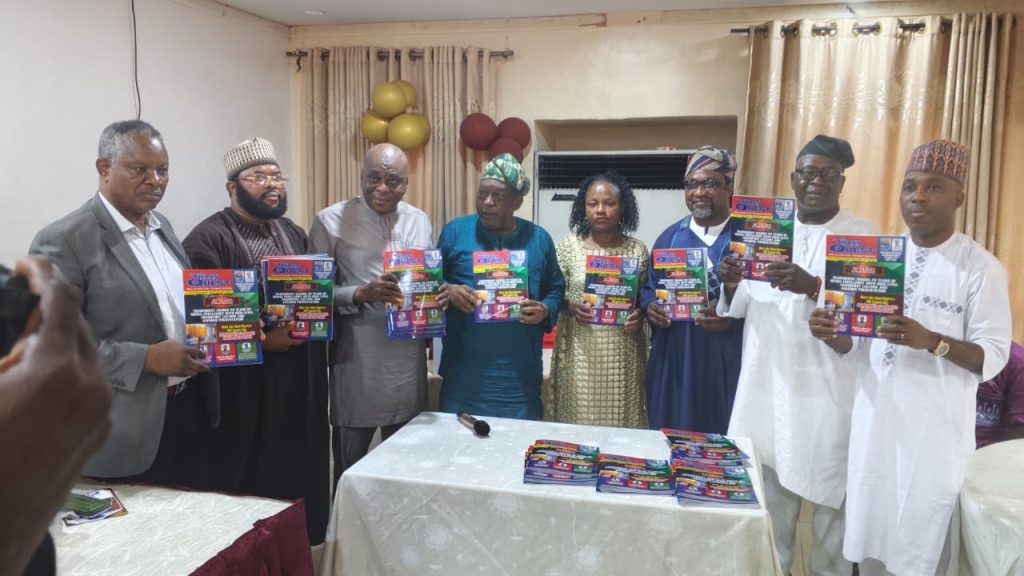

Maritime and transport experts have renewed calls for Nigeria to urgently move from oil dependence to the blue economy, warning that over reliance on crude is stifling economic growth and ignoring a multi- trillion dollar sector that remains largely untapped.
The experts who spoke at the Transquest 20th Anniversary Seminar and Awards at the weekend noted that the nation’s oil earnings is only a fraction and inconsequential compared to the immense revenue that could be generated if the blue economy’s potential were fully harnessed.
Speaking on the theme of the Seminar, “Leveraging Nigeria’s Maritime Potential to Drive Economic Growth,” Prof. Iyiola Oni, Director, Centre for Multi-modal Transport Studies, University of Lagos, noted that the country’s maritime potential remains largely underutilized, presently contributing less than 0.1% to the GDP against a potential of almost 10%.
“Any maritime nation is not supposed to be poor, “, he said, emphasizing that Nigeria’s extensive coastline and aquatic biodiversity present a significant opportunity for investment in maritime tourism, a sector valued at almost 6.45 trillion dollar globally.
He listed key strategies to maximize this potential to include port modernization and transformation, strong policies for trade facilitation, Public-Private Partnerships (PPPs) for infrastructure development- Ports, Marinas, Jetties,
empowering local shipping through disbursement of the Cabotage Vessel Financing Fund ( CVFF), investing in shipbuilding and diversifying into other sectors of the Blue Economy including fisheries, tourism.
Prof. Oni urged the Ministry of Marine and Blue Economy to demonstrate strong political will to ensure the swift ratification and implementation of the final Marine and Blue Economic Development Policy to address the systemic gaps, including the lack of a national fleet and limited ocean-going vessels.
Also speaking, seasoned maritime expert, Mr. Lucky Amiwero pointed to serious regulatory failures and structural deficiencies crippling the sector’s competitiveness.
He noted that Nigerian ports are largely unregulated, resulting in the highest port charges in the world.
“Port charges in Nigeria remain among the highest in the world, contributing to high cost of doing business and making Nigerian ports unattractive,” he stated, adding that neighbouring countries, particularly Ghana, are advancing faster.
Amiwero also argued that the Cabotage Act is not functioning as intended and requires urgent review to achieve its objective of building indigenous shipping capacity.
He recommended an urgent regulatory overhaul of the Nigeria’s port system including establishing a strong, independent regulator to monitor port efficiency, pricing, and shipping company operations.
He also seek the reduction of port charges to make Nigerian ports competitive in the West and Central African region and clarification of the structure and mandate of the Marine and Blue Economy Ministry to eliminate structural overlap and confusion with other ministries.
Chairman of the event, Professor Bamidele Badejo and other stakeholders commended Transquest Media for providing the platform for maritime sector dialogue over the years.
They called for sustained engagement with policymakers and stronger collaboration among stakeholders to reposition Nigeria as a true maritime and blue economy hub in West and Central Africa.
In his welcome address, Publisher, of Transquest Media, Felix Kumuyi noted that forr two decades, Quest Media Group has stood as a critical news watchdog and a trusted voice in the transport and maritime industry, delivering undiluted reportage and consistent advocacy for growth, transparency, and innovation.
He said this year’s theme, could not be more timely. as the maritime industry remains the backbone of the nation’s trade and economic prosperity. With visionary leadership, strategic investment, and collaborative effort, Nigeria’s maritime potentials can be harnessed to transform our economy, create jobs, and strengthen our global competitiveness.
Highlights of the event was the presentation of awards to organizations and individuals whose leadership and contributions have significantly advanced the transport and maritime sector including the Assistant Comptroller General of Customs, ACG, Muhammed Babandede, Prof. Bamidele Badejo,, Editor Maritime Today Media, Shulammite Olowofoyeku, President of APFFLON, Frank Ogunojemite amongst others.
More to read
Again, Customs seizes 204 pump-action rifles hidden in household goods at Tin Can port
Maritime agencies’ revenue jumps 160% to N1. 83tr in 2025 – Oyetola
Nigerian Navy, Turkiye deepen defense partnership, advance fleet modernisation