


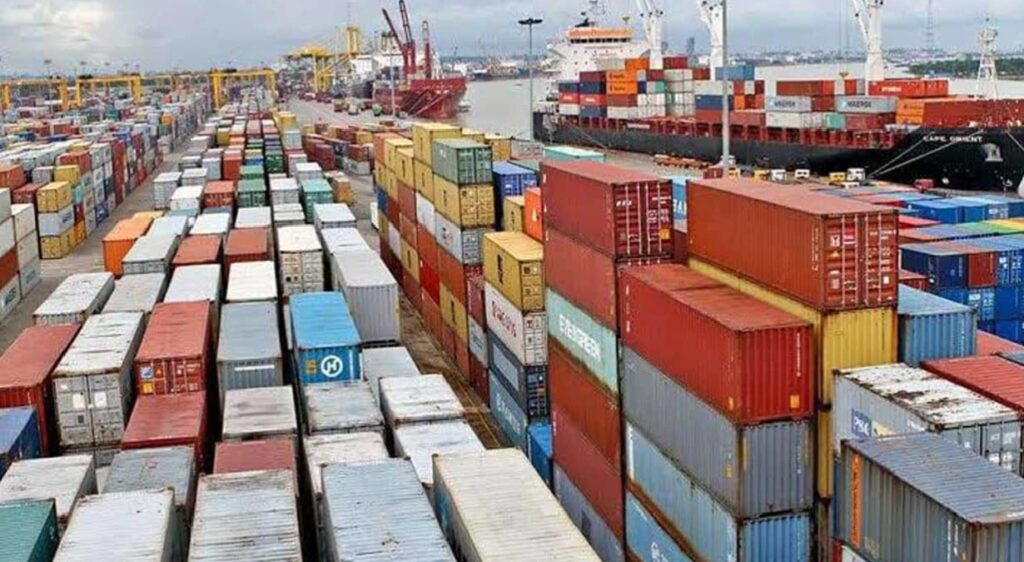

Nigeria’s two busiest seaports, Tin Can Island Port and Apapa Port, have been recognised among the world’s top 20 most improved container ports over the last five years, according to the 2025 Container Port Performance Index (CPPI) released by the World Bank and S&P Global Market Intelligence.
The report ranked Tin Can Island Port 10th globally among ports that recorded the highest improvements between 2020 and 2025, while Apapa Port placed 12th, underscoring significant progress in operational efficiency and vessel turnaround performance.
According to the report, Tin Can Island Port improved its CPPI score by 42 points, rising from -68 in 2020 to -26 in 2025. Apapa Port also posted a strong performance, improving by 35 points from -61 in 2020 to -26 during the same period.

The achievement places Nigeria among a select group of countries that have recorded substantial gains in port efficiency, cargo handling operations and vessel turnaround times over the past five years.
Nigeria’s ports outperformed several major international facilities in the improvement rankings, including France’s Marseille Port, Türkiye’s Iskenderun Port and India’s Jawaharlal Nehru Port, which ranked 11th, 13th and 14th respectively.
South Africa’s Port Elizabeth emerged as the world’s most improved container port with an 80-point increase, followed by Bahrain’s Khalifa Bin Salman Port with 75 points and Ecuador’s Posorja Port with a 70-point improvement.
Other ports featured in the top 20 list include Pakistan’s Muhammad Bin Qasim Port, Vietnam’s Haiphong Port, Italy’s Savona-Vado Port, China’s Mawan, Keelung and Fuzhou ports, Japan’s Kobe Port, the United States’ Philadelphia Port, Brazil’s Itapoa Port and Egypt’s Port Said.
The CPPI, now in its sixth edition, assesses container port performance globally using vessel call data and measures efficiency based on the time ships spend in port. The index evaluates factors such as nautical access, berth availability, cargo handling productivity, yard operations and coordination among port stakeholders.
The report noted that recent years have been characterised by significant supply chain disruptions triggered by the COVID-19 pandemic, geopolitical tensions, vessel rerouting and climate-related events. These challenges, it said, have increased congestion and disrupted vessel schedules across global shipping networks.
It stressed that vessel turnaround time has become a critical indicator of supply chain resilience and efficiency, noting that well-performing ports enhance trade competitiveness and improve the ability of supply chains to withstand and recover from disruptions.
In the foreword to the report, World Bank Group Director for Transport and Logistics, De la Borde, and Vice-President and Head of Maritime & Journal of Commerce at S &P Global Market Intelligence, Guy Sear, said supply chain disruptions often manifest in ports through vessel bunching, schedule unreliability and congestion, while prolonged vessel stays reduce available shipping capacity and exacerbate delays across global networks.
They added that by relying on actual vessel call data rather than self-reported indicators, the CPPI provides a consistent and objective benchmark for measuring port performance within global shipping networks.
More to read
Omi Eko: Management clarifies project implementation process
Customs intercepts N3.67bn cannabis-infused cookies, gummies from Canada at Tin Can port
Navy uncovers 40,000 litres of suspected crude oil in Delta