


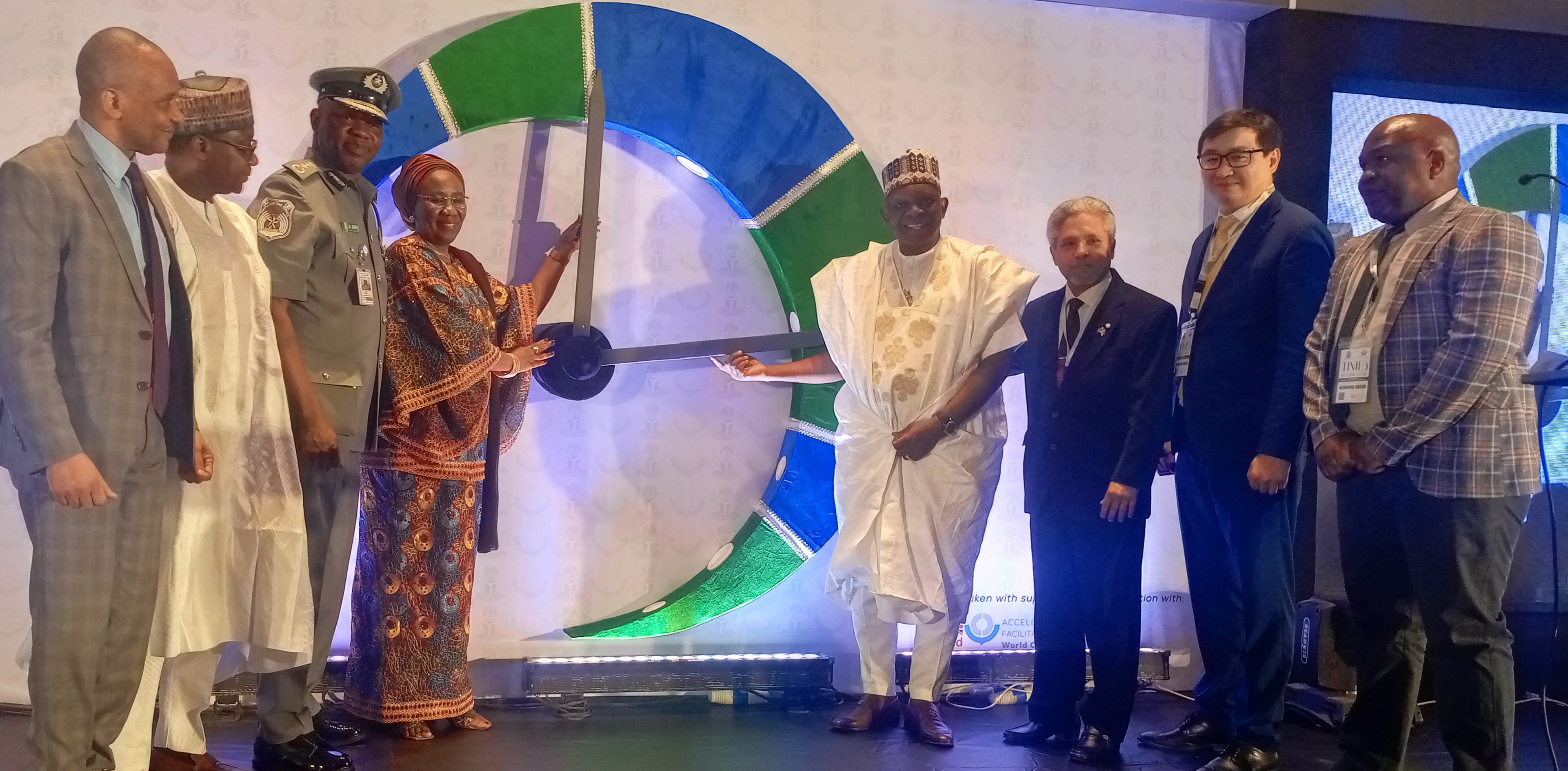

In a significant step towards improving its operation and trade efficiency, the Nigeria Customs Service (NCS) has launched the Time Release Study (TRS) with Tin Can Island Port, serving as the pilot location.
The TRS method, developed by the World Customs Organization is a systematic and standardized approach used to measure the total duration of time from the arrival of goods at the customs border until their release.
It aims to identify and address bottlenecks within the customs clearance process, ultimately making it faster and more efficient for businesses and benefiting the economy.

Speaking at the launch of the program in Lagos on Thursday, the Minister of Industry, Trade and Investment, Mrs Doris Uzoka- Anite lauded the Comptroller General of Customs, Adewale Adeniyi’s leadership and the TRS launch as tool to optimize customs processes and expedite the release of goods at Nigerian borders.
She said the launch of the TRS is testament to President Bola Tunubu- led administration’s dedication to enhancing trade and fostering a business-friendly environment.
Highlighting President Tinubu’s pledge to dismantle barriers and attract investments, the Minister reiterated the government’s commitment to creating a conducive landscape for international trade.
“The launch of the TRS aligns with our administration’s commitment to promote trade and improve the ease of doing business in Nigeria. This initiative is a reflection of Mr. President’s pledge to the global business community that he will eliminate all obstacles and create a conducive environment for businesses to flourish and for them to invest further in Nigeria.
“Under the visionary leadership of His Excellency, President Bola Tinubu we are steadfast in our commitment to foster an environment that is conducive to international trade, ” she said.
The Minister urged the NCS to prioritize trade facilitation alongside its security and revenue generation functions.
“While security and revenue are crucial,” the Minister emphasized, “doubling down on trade facilitation will lead to greater trade volume, competitiveness, and ultimately, revenue growth without the need for increased levies.”
Highlighting the importance of the African Continental Free Trade Area (AfCFTA), the Minister stressed the need for Nigeria to be competitive as the country now compete with the rest of Africa and globally for a market of 1.3 billion people.
“We know that there is 1.3 billion people on the continent. And that is actually the size of the market in Africa. So the only way we can compete is for us to be more efficient. And this is what TRS and the other initiatives that we’re putting together is aimed at doing.
“We must ensure that we make businesses more cost effective and that’s the best way to compete.
“When your goods and products services coming out from Nigeria is getting to the market faster than the competitors and it’s getting to the markets at a cheaper rate, then you’re competing and that’s what’s going to bring economic growth and prosperity to the rest of the businesses and of course the country.
“So we’re very happy and delighted that this initiative is coming at an auspicious time and at the right time to make us more efficient and to compete within Africa leveraging the AfCFTA, ” she said.
While acknowledging the NCS’s vital role in border security, the Minister commended its officers for daily risks faced.
She, however, encouraged further automation to reduce danger, suggesting “satellites, drones, scanners, and trackers” to monitor borders and trade without the need for human intervention while speeding up processes.
Earlier in his address, Comptroller General of Customs, Adewale Adeniyi, said the launch of the TRS marks a significant milestone in the ongoing efforts to enhance trade facilitation and streamline customs operations in Nigeria.
“Today we are joining other Customs Administrations in the world that have
embraced the tools developed by the World Customs Organisation (WCO), to
promote the growth of international trade.
“The WCO remains steadfast in its
commitment to advancing customs procedures through various instruments and tools, such as the Revised Kyoto Convention (RKC) and the World Trade
Organization (WTO) Trade Facilitation Agreement (TFA).
“Among these initiatives is the Time Release Study (TRS), developed to provide comprehensive insights into customs operations’ efficiency, ” he said.
Reflecting on the historical implementation of TRS in Nigeria, Adeniyi acknowledged past attempts in 2010 and 2018, drawing lessons from both experiences.
He highlighted significant progress made since then, including the implementation of paperless clearance, advancements in the Authorized Economic Operator (AEO) programs, and provisions under the new Customs Act addressing non-compliance through penalties.
In addition to TRS, Adeniyi announced other initiatives, including the deployment of the AEO program, Advanced Ruling, and the establishment of a Customs Laboratory.
These strategic measures, supported by the WCO, he said reinforce the NCS’s dedication to enhancing trade efficiency, fostering economic growth, and contributing to national development through collaboration, innovation, and strategic planning.
The Comptroller-General expressed gratitude to the Secretary General of the WCO for their invaluable support, resources, and expertise in advancing these initiatives.
Photo Caption:
Permanent Secretary, Ministry of Finance, Lydia Jafiya, ( 4th from left); Comptroller General of Customs, Adewale Adeniyi, and other stakeholders at the launch of the Time Release Study in Lagos on Thursday.
More to read
NPA moves to fix rail, upgrade inland dry ports infrastructure
Omi Eko: Management clarifies project implementation process
Customs intercepts N3.67bn cannabis-infused cookies, gummies from Canada at Tin Can port