


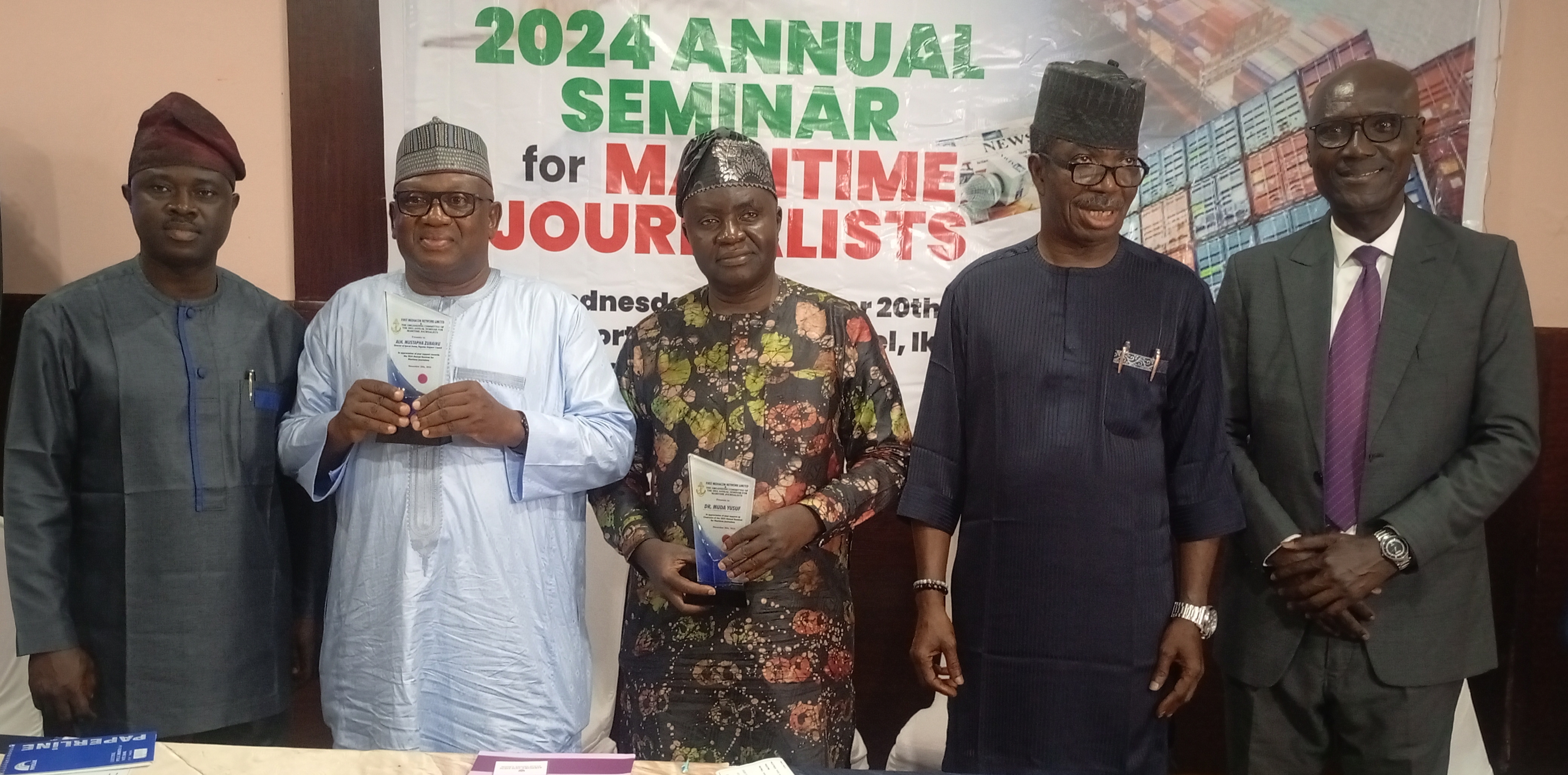
The Executive Secretary of the Nigerian Shippers’ Council (NSC), Pius Akutah, has expressed concern over the persistent infrastructural challenges and low adoption of technology in Nigerian ports.
Speaking at a seminar for maritime journalists in Lagos on Wednesday, Akutah highlighted the critical issues of outdated cargo handling equipment, inadequate road networks, and insufficient storage facilities.
Represented by the agency’s Director of Special Duties, Mustapha Zubairu, Akutah added that adoption of modern technology in port operations is still relatively low, hindering operational efficiency and transparency.

He noted that these infrastructural deficiencies hinders the NSC’s capacity to drive reforms and optimize port operations.
He said, “While the NSC can regulate economic activities, it has limited control over the physical infrastructure, which is largely under the purview of other government regulatory agencies, including Nigerian Ports Authority (NPA), Federal Ministry of Works, Nigeria Railways service and private investors. The NSC’s ability to drive reforms and improve port operations is therefore constrained by the broader infrastructural deficiencies within the port sector.”
Akutah also decried the persistent security challenges, including cargo theft, piracy, and general lawlessness at the nation’s ports.
These security risks, he said, negatively affect port operations and increase the cost of shipping.
“Additionally, corruption among port officials and stakeholders remains a problem, with illegal fees, bribery, and rent-seeking behavior complicating the NSC’s regulatory functions and undermining reforms.
Highlighting other challenges facing the Council in the performance of its regulatory roles, Akutah said, “High tariffs, port charges, and inefficiencies at the ports increase the cost of doing business in Nigeria.
“While the NSC is responsible for overseeing tariff structures and pricing, it faces the challenge of balancing the interests of port operators, shippers, and the government while trying to make the ports competitive. Reducing costs for importers and exporters while ensuring sustainable revenue generation for port authorities remains a delicate balancing act.
“Nigerian ports continue to struggle with congestion and inefficiency, despite efforts to streamline operations. Although the NSC is not directly responsible for managing traffic, it is charged with improving port competitiveness, which includes addressing delays, demurrage charges, and other inefficiencies that arise from congestion. The Council is work closely with terminal operators and other agencies to mitigate these issues.”
The NSC boss stressed the urgent need for the passage of the Nigerian Shipping and Port Economic Regulatory Agency Bill 2023 to empower the Council by providing a legal framework for its operations.
He said the bill, when passed into law will promote efficiency, and streamline processes in the nation’s ports.
“The Port Economic Regulatory Agency Bill if passed, will empower the NSC to take on a more significant regulatory role in Nigeria’s ports, overseeing tariffs, service standards, and port efficiency.
“This would enhance the governance of port operations, improve infrastructure development, and ensure fair competition among stakeholders.
“The NSC would also play a central role in making Nigerian ports more globally competitive by aligning them with international standards. Overall, the bill would position the NSC to contribute significantly to improving the performance and economic outlook of Nigeria’s port sector, ” he said.
Earlier in his welcome address, convener of the seminar and Chief Executive Officer of First Mediacon Network Limited, Mr. Sesan Onileimo disclosed that the theme of the event ‘The Nigerian Shippers’ Council in Transition: Issues, Prospects, Challenges’ was deliberately chosen to offer a dual opportunity for maritime journalists and content owners to acquire knowledge about the emerging dispensation at the NSC.
He said, “It is noteworthy that the ‘Annual Seminar for Maritime Journalists’ has become one of the Key Performance Indicators (KPI) of the PR Department of the NSC, as an organisation. We are deeply grateful to successive heads of the PR Department of the Council.
“So, every year, in the last nine years, we gather like this to deliberate on a particular issue that is central or germane to the Nigerian maritime industry.
“This year, we deliberately narrowed down our focus to a topic that can offer a dual opportunity for maritime journalists and content owners to acquire knowledge about the emerging dispensation at the NSC, and also understand the apprehension of direct stakeholders about the Nigerian Shipping and Port Economic Regulatory Agency Bill 2023, which is in the last stage of being enacted.
“We commend the determination of the Management of the NSC for giving the Bill all that is required to come to life. The bold move to regenerate the NSC is the motive behind the zeal.”
Photo caption:
L-R: Manager, Corporate Communication, SIFAX Group, Muyiwa Alande; Director Special Duties, Nigerian Shippers’ Council,, Zubairu Mustapha; Chief Executive Officer, CPPE , Dr. Muda Yusuf,; Publisher Shipping World Magazine, ,Elder Asu Beks,and Chief Executive Officer of First Mediacon Network Limited, Mr. Sesan Onileimo at the seminar for maritime journalists held in Lagos on Wednesday.
More to read
NRS, Customs, PEBEC assess NSW progress, to engage terminal operators on demurrage waivers
Shippers’ Council achieves full digitization via ECMS- Akutah
60 shipowners jostle for cabotage fund as NIMASA pledges transparent disbursement