


…. as Customs launches pilot phase of indigenous software for cargo clearance
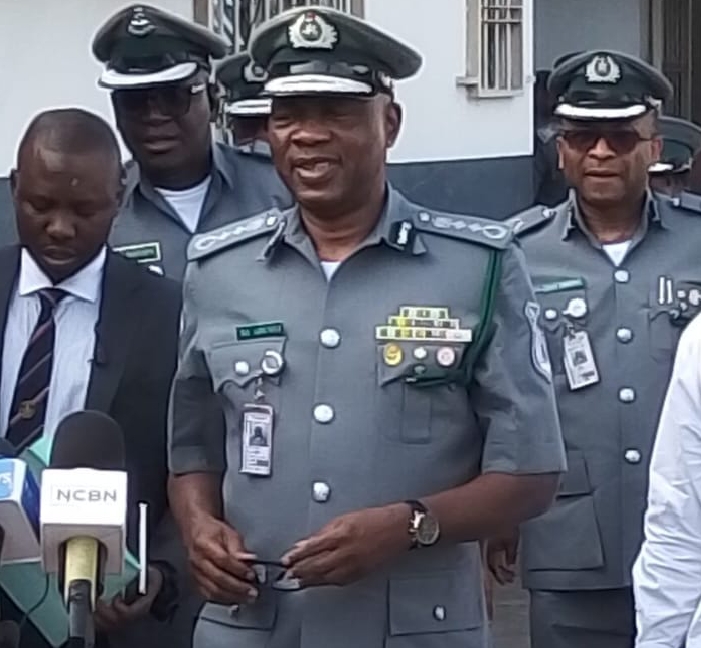
The Nigeria Customs Service (NCS) on Wednesday launched the pilot phase of its modernizatiion software, B’Odogwu for processing customs documentation and clearance at the nation’s ports, beginning with the PTML command.
The B’ Odogwu, an indigenous software developed by officers of the NCS replaces the NICIS II and it is fully managed by the NCS through the Trade Modernization Project Limited.

With the new development, the NCS has taken over the implementation and operations of one of the main deliverables of the Modernization Project, putting an end to foreign service provider Webb Fontaine’ years of managing its ICT platforms.
Speaking with journalists shortly after addressing officers of the PTML command on the launching of the new ICT software, Comptroller General of Customs, Adewale Adeniyi, said the roll-out of B’Odogwu, the new unified Customs management system marks a significant milestone towards modernizing customs operations, aligning with global best practices.
“This exercise is firmly rooted in the policy thrust of the NCS management upon my assumption of office which emphasizes the need to consolidate on previous gains while boldly embracing innovative solutions to long-standing challenges” he said.
Adeniyi stated that the software was developed following experiences with previous service provider who, despite multiple contract extensions, failed to meet their deliverables and effect the expected handover at the end of their contract period in December 2022.
He lamented the incessant system break down experienced under the foreign service provider, noting that the Service cannot continue to wait for them to hand over, hence its decision to develop its own indigenous system.
His words, “The number of times the foreign system has been down is more than the number of times it is up. Most of the time, we are always addressing issues of system breakdown. We cannot continue to wait for them to rectify their systems and hand over to us, so we took the bull by the horn and develop and indigenous system.
“So the state in which it is been handed over to us, if at all they hand over to us tomorrow (because that has not happen) is in comatose.
“While we would have preferred a different outcome, this situation has strengthened our resolve to develop the indigenous solutions that truly serve our needs. It is disappointing when organizations fail to leverage their extended presence in Nigeria to build credible reputations that could benefit them both locally and internationally. ”
Adeniyi assured that the new indigenous software will end era of network downtime, facilitate seamless trade, enhance security and promote ease of doing business.
“Today marks another significant milestone as we commence user creation on B’Odogwu, which will give users access to their work environments within a unified platform.
“‘Odogwu is our new customs management system that embodies our vision for a paperless customs administration that facilitates seamless trade while maintaining robust security measures.
“This system will enhance our ability to steamline end-to-end business processes, provide stakeholders with customized integration capabilities, support more efficient and intelligent business decisions and facilitate ease of doing business.
“It is important to note that B’Odogwu will eventually replace the current Nigeria Integrated Customs Information System (NICIS II) as the NCS Legacy System. The system has been developed with foresight, acknowledging that the National Single Window will be coming on board soon, and B’Odogwu will be integrated with it when implemented by the Federal Government, ” he said.
Adeniyi added that B’Odogwu is also designed to complement ongoing efforts to leverage Artificial Intelligence, Machine Learning, Virtual Reality, and Mixed Reality technologies in customs administration.
He said that the plaform aligns with the NCS’s commitment to maintaining strong, resilient, open, and prosperous borders that epitomize the legal, policy, and strategic commitments of the Service.
Speaking on the choice of PTML for the pilot implementation of the new software, Adeniyi said the decision is based on PTML’s proven track record and availability of modern infrastructure that supports seamless customs operations.
“PTML has received upgraded network infrastructure to meet modern demands as we see more complexities in declarations and address the peculiarities in our trade characteristics. I can confidently say that the era of network downtime is behind us.
“I want to imagine that if documentation is fine, if there are no issues with documents that are submitted, what Odogwu promises us is even better infrastructure, so we are going to have a better, swifter processes of documents, ” he said.
Adeniyi, however, acknowledged that some technical challenges may arise during the roll-out phase but emphasized that this is normal with any new system.
He assured that a team of technical experts would be on hand to provide immediate support and ensure as smooth a transition as possible.
“This team will be available round-the-clock to address any issues that may arise” he said.
Adeniyi disclosed that the Service is also launching a verification platform for agents, which automates registration for licenses and permits.
More to read
NRS, Customs, PEBEC assess NSW progress, to engage terminal operators on demurrage waivers
Shippers’ Council achieves full digitization via ECMS- Akutah
60 shipowners jostle for cabotage fund as NIMASA pledges transparent disbursement