


By John Omoaka
The Federal Government says it is stepping up efforts to make Nigeria self-sufficient in fish production, even as Norway pushes for the removal of import duties on stockfish and its heads.
Minister of Marine and Blue Economy, Adegboyega Oyetola, represented by Mr Wellington Omoragbon, Director of Fisheries and Aquaculture, disclosed this at an interactive seminar between Nigerian and Norwegian seafood stakeholders held in Lagos on Wednesday.

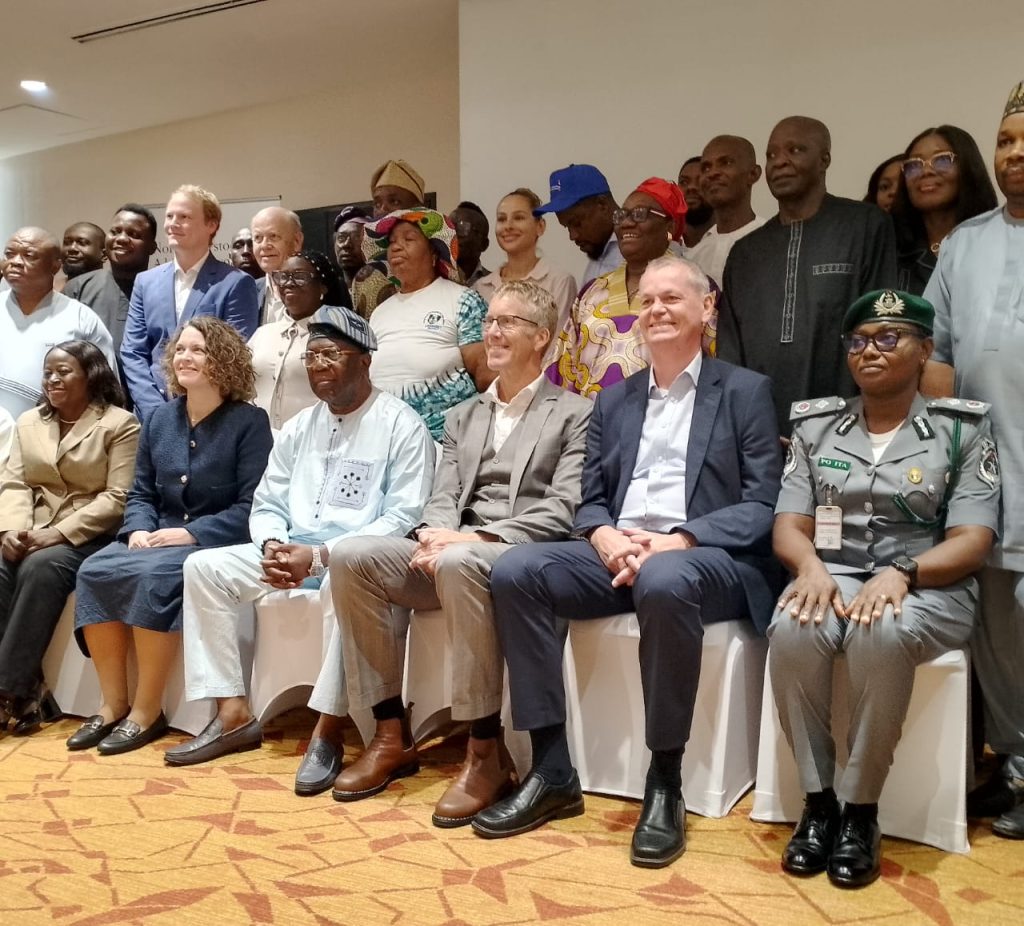
The seminar brought together regulators, importers, exporters, and aquaculture experts to strengthen cooperation in the seafood trade.
Oyetola said the government is implementing key reforms to boost local fish output through aquaculture expansion, improved quality control, and upgraded cold chain systems.
He revealed that plans are underway to establish a national fish terminal, enhance export residue monitoring facilities, and improve training for fisheries officers and fish farmers nationwide.
“While we still rely on imports to bridge domestic supply gaps, our ultimate goal is self-sufficiency — driven by investment, technology, and strong partnerships,” Oyetola said.
Oyetola applauded Norway for its long-term collaboration in fisheries management and knowledge sharing, noting that seafood remains central to Nigeria’s blue economy vision.
In his remarks, the Royal Norwegian Ambassador to Nigeria, Svein Baera, described the Norway–Nigeria seafood trade as a historic and mutually beneficial partnership spanning several decades.
He explained that Nigeria is one of the world’s largest importers of Norwegian stockfish but added that global cod quota cuts — aimed at protecting fish stocks — have reduced supply and driven up prices.
“We are appealing to the Nigerian government to consider a zero per cent import duty on stockfish heads. It will help make this important protein source more affordable for consumers,” Baera said.
The ambassador said Norway remains open to deeper collaboration with Nigeria through technology transfer, capacity building, and sustainable fisheries management.
Regional Director of the Norwegian Seafood Council, Johnny Håberg, said Norway has supplied stockfish to Nigeria for over a century, stressing that the relationship extends beyond trade to technical cooperation.
He noted that price increases are tied to reduced cod quotas, not exporter pricing. “We’d love to offer more stockfish at better prices, but supply is limited,” he said.
Abiodun Oritsejemine Cheke, Fisheries Consultant to the Council, announced plans for new training programmes targeting Nigerian fish farmers and fisheries officers, focusing on sustainability, documentation, and export certification.
Cheke renewed the call for a temporary 150-day duty waiver on stockfish heads, describing the product as “a low-cost protein option for Nigerian families.”
“A ₦200 pack of stockfish can feed a family of four when cooked with local dishes. We hope the government will consider this request favourably,” she added.
Cheke also disclosed that once export restrictions ease, Norway plans to import Nigerian farmed tilapia at zero export duty, a move she said would boost local production and international trade opportunities.
Both countries pledged to deepen cooperation in fisheries management, aquaculture development, and trade facilitation.
Stakeholders agreed that while global supply challenges persist, sustained partnership between Nigeria and Norway will drive food security, create jobs, and advance Nigeria’s goal of becoming self-sufficient in fish production.
Representatives from the Central Bank of Nigeria (CBN), Nigeria Customs Service, and National Agency For Food And Drug Administration And Control (NAFDAC) were present including various associations of fish business.
More to read
NRS, Customs, PEBEC assess NSW progress, to engage terminal operators on demurrage waivers
Shippers’ Council achieves full digitization via ECMS- Akutah
60 shipowners jostle for cabotage fund as NIMASA pledges transparent disbursement