


Shipping mogul and Chairman, Starzs Investments Company Limited, Engr Greg Ogbeifun has shed more light into why the bid by the Federal government to establish a national shipping carrier with foreign private investors collapsed.
Speaking at a media parley in Lagos on Wednesday, Ogbeifun said contrary to claims by the Minister of Transportation, Rotimi Amaechi that the proposed national carrier failed due to the failure of Nigerian shipowners to raise 60 percent stake allotted to them, the major impediment to the establishment of the national carrier was because of Nigeria’s unfavorable trade policies and obsolete tax laws.

Recall that the National Fleet Implementation Committee headed by the immediate past Executive Secretary of Nigerian Shippers’ Council (NSC) Hassan Bello had signed a Memorandum of Understanding (MoU) with Pacific International Lines (PIL), a Singapore- based shipping line under the terms of agreement that Nigerian private sector operators would maintain a 60 percent equity ratio while PIL retains 40 percent.
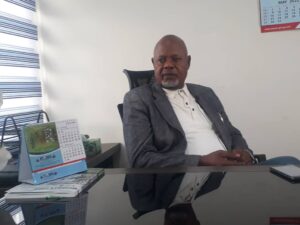
According to Ogbeifun who was a member of the committee, the committee never got to the stage where indigenous shipowners were required to raise their 60 percent stake before PIL pulled out of the venture.
He said, “The Minister of Transportation still has that erroneous belief that Nigerians indigenous shipowners could not bring their 60 percent, we never got to that stage. The committee took the presentation on these fiscal issues up to the Presidency and our presentation was made by Mfon Usoro where she used the Nigerian Investment Promotion Commission (NIPC) compendium. The incentives being enjoyed by the Aviation industry today are not considered in the shipping sector to enable them work. So, in our case, it was so bad that in the compendium of lists of companies and establishments and industries, shipping was not even there at all. So as far as this country is concerned, the government does not recognize maritime or shipping at all.
“We made the presentation to the Vice President at the Villa because he was then the Chairman of the Economic Management Team, but it was from one meeting to another and talk without action. The entity that will take you and make sure things happen is the Minister of Transport and it would have happened. But if he had taken this erroneous, non- existence stance that shipowners didn’t have money to bring 60 percent, that is not true. The man that would have fought for it and made it happen had taken a negative position. We have a government that is not generating money from the real sector because it did not create an enabling environment for the real sector to be able to function, create jobs and stimulate the economy, that is why they are looking for money everywhere.”
Ogheifun said the seeming lack of commitment and willingness by the Nigerian government to review the nation’s tax laws informed PIL’s decision to withdraw from the MoU to establish a national shipping carrier.
“I know that our committee went to Singapore with the Minister of Transportation to sign an MoU with PIL. After signing the MoU, we came back to Nigeria, only for PIL to write to the committee that they have looked at the extant laws and that the idea will not be viable unless the country reviews its tax laws in line with what other nations do to enable the establishment of fleet in their country.
“For example, the review of our tax law in the area of import duty, our tonnage tax and VAT because of the capital-intensive nature of this trade, they needed to do this to give the fiscal environment that will enable stakeholders coming in there survive, be sustainable and above all to be competitive in the global trade.
“For example, if I were to buy a crude oil tanker that may be Panama size, and I am to spend $100million or more to buy the tanker. If it is going to be registered in this country, owned by a Nigerian company, crewed by Nigerians, our laws demand that I will pay import duty on that. If I am to draw from the experience of the last ship we built in China, it costs us approximately 14 percent of the cost of building the ship for import duty and other associated importation cost.
“Our committee did a global survey of successful countries that have established national fleet- Greek, Angola, even Kuwait all have zero duty, five-year tax holiday, reduced vat, all these were put in place so that your cash flow will enable you pay for the cost of building but in our country that is not to be. So PIL looked at it that if they are going to go after the same cargo as other global traders and these are the conditions, our charge out rate for the cargo affreightment must be higher than anybody else and they said no, it is not going to be viable and competitive and that was how they backed out,” he said.
Ogbeifun noted that until the government reviews its tax laws and address challenges of indigenous shipowners, floating another national shipping carrier may be another exercise in futility.
More to read
NRS, Customs, PEBEC assess NSW progress, to engage terminal operators on demurrage waivers
60 shipowners jostle for cabotage fund as NIMASA pledges transparent disbursement
Minister orders probe as indigenous barge companies shrink from 83 to 8