



Nigeria is losing between N3.5 trillion and N5 trillion annually to logistics inefficiencies, with poor transport infrastructure, inadequate cold-chain facilities, rising haulage costs and weak intermodal connectivity undermining trade, food security and economic growth, stakeholders said on Thursday.
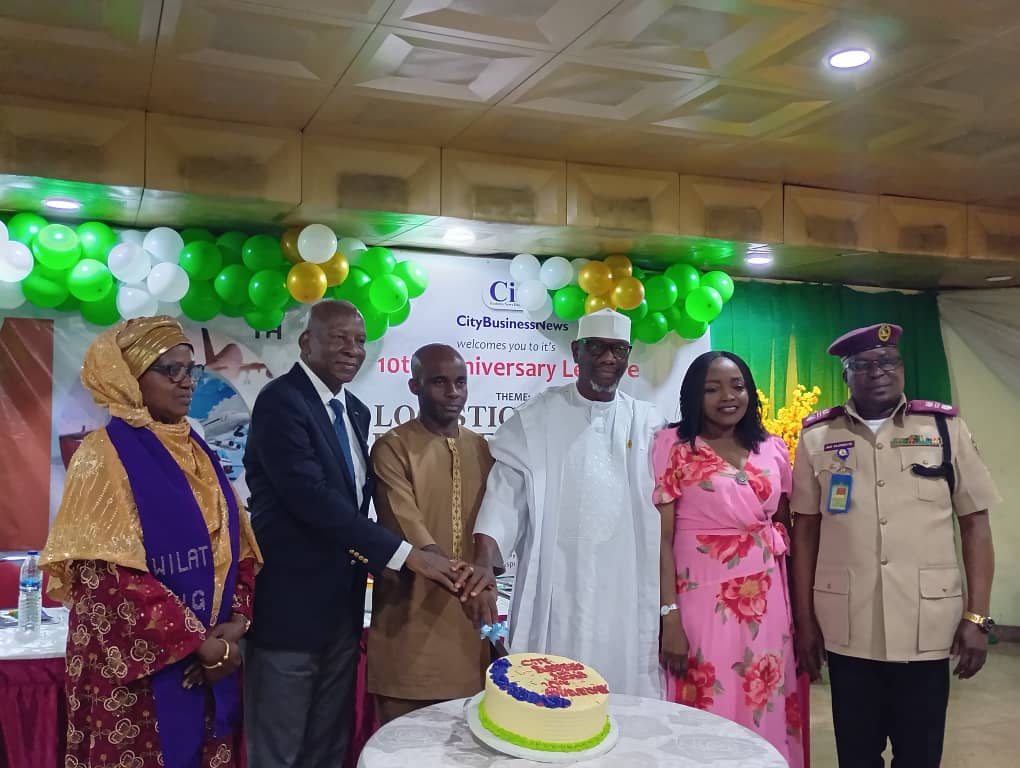
The concerns were raised at the 10th Anniversary Lecture of City Business News in Lagos, themed “Logistics as the Engine Room of Nigeria’s Economy,” where government officials, transport professionals and industry leaders called for coordinated reforms to improve cargo movement, strengthen supply chains and position Nigeria as a leading logistics and maritime hub in West Africa.
Delivering the keynote address, President and Chairman of Council of the Chartered Institute of Logistics and Transport (CILT) Nigeria, Dr. Boboye Oyeyemi, described logistics as the backbone of the nation’s economy, noting that the sector is valued at about $11.66 billion and contributes more than N1 trillion to the country’s Gross Domestic Product (GDP).

Oyeyemi said Nigeria continues to incur huge economic losses due to inefficient logistics systems, particularly in the agricultural sector, where between 30 million and 40 million metric tonnes of food are lost annually before reaching consumers because of poor road networks, inadequate cold-chain infrastructure and inefficient transportation systems.
According to him, the post-harvest losses are estimated at between $2.3 billion and $3.3 billion annually, equivalent to about N3.5 trillion to N5 trillion, with the losses contributing significantly to food inflation and supply chain disruptions.
«”The Middle Belt is the food basket of the nation. To move goods from the Middle Belt to Lagos, about 40 per cent of them rot away,” Oyeyemi said.»
He noted that more than 90 per cent of freight movement in Nigeria is undertaken by road, leaving the logistics sector vulnerable to rising diesel prices, deteriorating highways, congestion and multiple checkpoints that increase the cost of transporting goods across the country.
The CILT President disclosed that transport operators spend between N150,000 and N250,000 on unofficial payments during long-haul operations, while rising diesel prices continue to erode operators’ margins and increase the cost of goods nationwide.
To address the challenges, Oyeyemi called for the removal of illegal checkpoints, restoration of weighbridges on major highways to curb overloading, wider adoption of Compressed Natural Gas (CNG) by haulage operators and stronger policy coordination across Nigeria’s transport sector.
He also advocated greater investment in inland waterways transportation, rail freight and port-linked logistics infrastructure, saying improved integration of road, rail and maritime transport would enhance cargo evacuation, reduce logistics costs and improve supply chain efficiency.
Oyeyemi identified the Lekki Deep Sea Port, ongoing expansion of Onne Port, growing barge operations and implementation of the National Single Window as critical initiatives capable of improving cargo clearance, easing pressure on congested port access roads and facilitating trade.
Founder of ABC Transport Plc, Sir Frank Nneji, urged the Federal Government to accord greater priority to road transport infrastructure, arguing that the sector remains the primary mode of movement for passengers and freight across the country.
He called for increased private sector participation in road development through concession arrangements and stressed the need to improve security along major transport corridors to safeguard commuters, transport operators and cargo.
Corps Marshal of the Federal Road Safety Corps (FRSC), Shehu Mohammed, reaffirmed the Corps’ commitment to improving safety on Nigerian highways through strategic partnerships, stricter enforcement of traffic regulations and sustained public awareness campaigns aimed at reducing crashes and ensuring safer movement of people and goods.
On gender inclusion, President of Women in Logistics and Transport (WiLAT), Mrs. Khadijat Sheidu-Sabi, whose address was delivered by Mrs. Fatima Jatto of the Nigerian Ports Authority (NPA), said increasing women’s participation in logistics and transportation would strengthen innovation, leadership and sustainable growth across the sector.
Stakeholders at the lecture agreed that improving logistics efficiency remains essential to reducing food inflation, lowering shipping and transportation costs, enhancing port efficiency, strengthening supply chains and supporting Nigeria’s participation in regional trade under the African Continental Free Trade Area (AfCFTA).
More to read
Omi Eko: Management clarifies project implementation process
Customs intercepts N3.67bn cannabis-infused cookies, gummies from Canada at Tin Can port
Navy uncovers 40,000 litres of suspected crude oil in Delta