


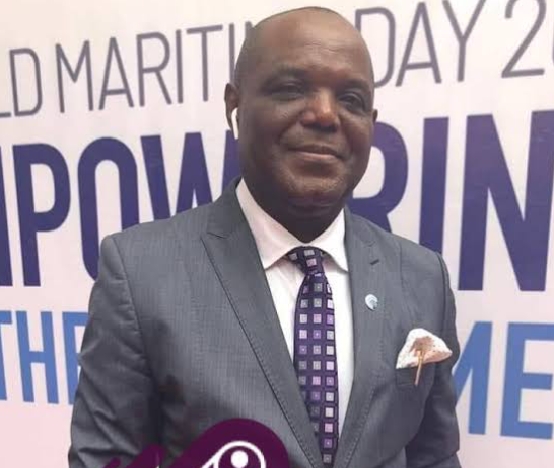

By Okey Ibeke
The recent Technical Assistance Mission on Post Clearance Audit (PCA) organised by the World Bank Group in collaboration with the Nigeria Customs Service (NCS) under the Accelerated Revenue Mobilization Reform (ARMOR) Programme deserves more than passing attention. Beyond a routine capacity-building exercise, the initiative represents another important milestone in Nigeria’s ongoing effort to modernise customs administration, facilitate legitimate trade and strengthen revenue generation.
The two-week mission, which commenced at Customs Headquarters in Abuja on June 1 and concluded on June 12, focused on strengthening compliance management, improving audit capabilities and deepening trade facilitation through internationally accepted post-clearance audit practices.

Post Clearance Audit is a customs control mechanism through which Customs verifies the accuracy of import and export declarations after goods have been released. Rather than relying almost exclusively on lengthy border inspections, Customs officers examine traders’ books, accounting records, commercial documents and business systems to confirm that the correct duties and taxes were paid and that all import regulations were complied with.
PCA is one of the key pillars of modern customs administration because it allows compliant cargo to move quickly while preserving government’s ability to recover revenue where irregularities are discovered.
Historically, Nigeria’s customs administration has relied heavily on physical examinations, documentary checks, compliance alerts and border interventions. While these measures have contributed to revenue collection, they have also prolonged cargo clearance, increased logistics costs, encouraged port congestion and weakened Nigeria’s competitiveness as a trading nation.
A robust PCA system offers a more balanced approach. Instead of delaying every consignment at the ports, Customs can release low-risk cargoes promptly while conducting detailed compliance verification afterwards. This approach aligns with the provisions of the WTO Trade Facilitation Agreement and the standards of the World Customs Organization (WCO), both of which encourage customs administrations to strike a balance between effective control and trade facilitation.
The timing of the ARMOR mission is therefore strategic. Nigeria is simultaneously pursuing several major reforms, including the National Single Window Project, customs digitalisation, port modernisation, ease-of-doing-business initiatives, improved non-oil revenue mobilisation and reduced cargo dwell time.
More importantly, the programme fits squarely into the reform agenda of the Comptroller-General of Customs, Bashir Adewale Adeniyi, whose administration has consistently pursued the transformation of the Service into a modern, intelligence-driven and technology-enabled customs administration.
Since assuming office, Adeniyi has emphasised the migration from traditional enforcement methods to risk-based compliance management anchored on technology, intelligence and internationally recognised customs practices. Under his leadership, the Service has accelerated customs automation, strengthened stakeholder engagement, expanded authorised economic operator initiatives, improved inter-agency collaboration, enhanced valuation and classification controls, and intensified officers’ capacity development.
The World Bank technical assistance also complements the Service’s ongoing implementation of the indigenous B’Odogwu customs management system, the National Single Window initiative and other digital reforms designed to reduce human contact, improve transparency and facilitate trade.
Equally significant is Adeniyi’s growing influence within the international customs community. As Chairman of the World Customs Organization (WCO) Policy Commission, and a respected member of the WCO Council leadership, he has elevated Nigeria’s profile within the global customs family. These leadership positions provide Nigeria greater access to international technical expertise, policy dialogue, institutional partnerships and capacity-building opportunities.
The World Bank’s sustained engagement with Nigeria Customs under the ARMOR Programme reflects growing international confidence in the Service’s reform direction and its commitment to aligning with global customs standards.
If effectively implemented, the lessons from the PCA mission could become the missing link between trade facilitation and revenue assurance.
One of the strongest justifications for strengthening PCA is revenue protection. Nigeria continues to lose substantial revenue through under-valuation, incorrect tariff classification, abuse of concessions and waivers, false declarations, transfer pricing manipulation and other sophisticated forms of customs fraud.
International experience demonstrates that many of these violations can only be uncovered through systematic post-clearance audits rather than physical examination at the ports.
Another major advantage lies in faster cargo clearance. Nigeria’s ports remain burdened by multiple inspections and repeated interventions. A functional PCA regime would allow compliant importers to obtain quicker cargo release, reduce demurrage costs, improve supply chain predictability and enhance the competitiveness of Nigerian ports.
Perhaps even more critical is the role of Customs Risk Management. Risk management is a systematic process through which Customs identifies, assesses and targets high-risk consignments for closer examination while allowing compliant and low-risk cargoes to move with minimal intervention. It enables Customs to deploy scarce enforcement resources more efficiently without disrupting legitimate trade.
A successful PCA programme cannot function without an effective risk management system because both complement each other. Risk management determines which consignments require immediate intervention, while PCA verifies compliance after release and continuously improves risk profiling using audit findings.
The ARMOR mission is therefore expected to strengthen Nigeria Customs’ risk management framework by enabling the Service to distinguish more accurately between compliant and non-compliant traders. As compliance data improves, Customs will be able to develop more reliable trader profiles, focus enforcement resources on high-risk operators and facilitate faster clearance for compliant businesses.
The true measure of success, however, will not simply be the establishment of another audit unit but a noticeable reduction in unnecessary border interventions. Many customs administrations claim to operate PCA systems while continuing excessive physical examinations, documentary checks and cargo interceptions.
Stakeholders expect that successful implementation of the ARMOR recommendations will progressively reduce reliance on physical examinations, repetitive compliance alerts and multiple documentary interventions, allowing compliant cargoes to move more efficiently through Nigeria’s ports and border stations.
Challenges nevertheless remain.
One major obstacle is poor record-keeping among many importers, whose accounting and inventory management systems often fall below internationally acceptable standards. Effective PCA depends on accurate commercial records capable of supporting audit verification.
Capacity development presents another challenge. Post Clearance Audit requires specialised knowledge in accounting, auditing, customs valuation, tariff classification, international trade transactions, forensic auditing, information technology and data analytics.
Encouragingly, the Nigeria Customs Service has already begun addressing this gap through sustained officer training, specialised professional development programmes, greater collaboration with international development partners, investments in digital systems and the strengthening of its risk management architecture. The ARMOR mission therefore builds on reforms already underway rather than initiating them from scratch.
Institutional culture may prove even more challenging. Traditional customs administrations derive much of their authority from controlling cargo at the border. PCA requires officers to place greater confidence in intelligence, technology and risk-based controls while shifting enforcement emphasis to post-release verification. Such institutional transitions naturally encounter resistance because they alter long-established operational practices.
The ultimate success of the ARMOR mission will therefore be measured by tangible performance indicators, including shorter cargo clearance times, fewer physical examinations, reduced cargo alerts and interventions, increased audit coverage, higher levels of voluntary compliance, improved revenue recovery through post-clearance audits, enhanced trade facilitation indicators and shorter cargo dwell times at Nigerian ports.
The World Bank-supported ARMOR Technical Assistance Mission on Post Clearance Audit is undoubtedly one of the most important components of the broader customs reform programme currently unfolding in Nigeria. If fully implemented, it has the potential to improve revenue assurance, strengthen compliance, facilitate legitimate trade, enhance Nigeria’s competitiveness and reinforce confidence in the country’s customs administration.
More importantly, it reflects the broader vision of Comptroller-General Wale Adeniyi to reposition the Nigeria Customs Service as a professionally competent, technologically driven and internationally respected institution capable of supporting Nigeria’s economic transformation while safeguarding government revenue.
Maritime and international trade stakeholders will now look beyond the training sessions and technical presentations to measurable outcomes. The real success of the programme will be seen when compliant cargoes move through Nigerian ports with fewer delays, risk management becomes fully operational, post-clearance audit assumes its rightful place as the principal compliance tool, and Nigeria’s ports become more efficient, predictable and globally competitive.
Okey IBEKE is the Publisher, Business and Maritime West Africa.
More to read
Again, Customs FOU ‘A’ rescues five live pangolins in Ogun State
Dredgers deny extortion allegations against Lagos Commissioner Alebiosu, Cardozo
Customs, TMPL test newly acquired cargo scanners in China ahead of deployment