


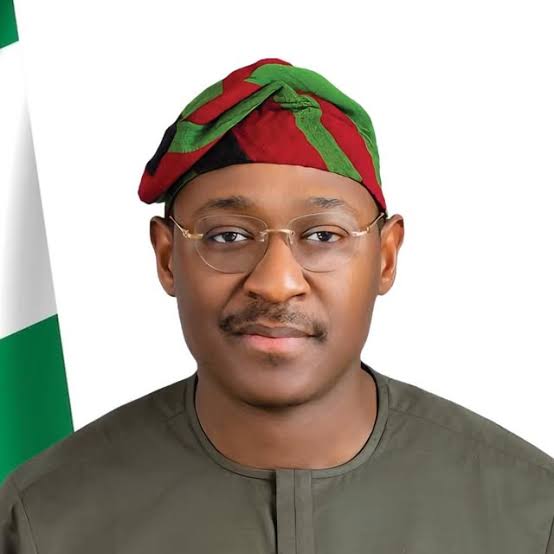

The Nigerian Safety Investigation Bureau (NSIB) has decried funding gaps affecting its operations, saying the lack of remotely operated vehicles (ROVs) is hampering its capacity to effectively investigate maritime accidents across the country.
Director-General of the NSIB, Captain Alex Badeh Jr., disclosed this on Friday during a virtual media briefing, where he said the bureau was working with the Presidency to develop a more sustainable funding arrangement to support its expanding multimodal accident investigation mandate.
Badeh attributed part of the funding challenge to the failure of the Nigerian Maritime Administration and Safety Agency (NIMASA) and the Nigerian Railway Corporation (NRC) to remit three per cent of their revenues to the NSIB, to support accident investigations in their respective sectors.

He said the funding shortfall had significantly affected the bureau’s operations, resulting in constraints on training, equipment procurement and deployment of investigators.
“The funding challenge is affecting us terribly, but that’s not going to stop us from doing our job. A lot of training that we should be doing can’t be done, and a lot of equipment that we should procure, we can’t procure,” Badeh said.
He identified the absence of an ROV as a major equipment gap affecting maritime investigations, particularly incidents involving boats and vessels that sink.
“I don’t think any government agency has an ROV. We tried with the Navy but they don’t have too. Even with our inland waterways, whenever a boat sinks, they don’t have an ROV. And if you look at our inland waters, they are very brackish. So even if a diver went down there, he can’t see anything,” he said.
According to him, an ROV would enable investigators to see clearly underwater, retrieve evidence from accident sites and, where possible, assist in the recovery of bodies.
Badeh said the NSIB currently relies on funds meant for aviation investigations to undertake some maritime investigations, adding that the situation had contributed to the bureau operating on a deficit budget every year.
He called for increased funding from NIMASA, saying this would enable the bureau to acquire specialised equipment and improve its capacity to investigate maritime accidents.
The NSIB boss also disclosed that the bureau had strengthened its maritime investigation capacity through the recruitment and specialised training of investigators.
He said the bureau currently had about six maritime accident investigators and was bringing international experts to Nigeria to further strengthen their skills.
Badeh disclosed that four maritime accident investigation reports were ready for release, pending comments from relevant stakeholders. The reports, he said, covered incidents that occurred in 2024 and 2025.
He added that several other maritime investigation reports were awaiting stakeholder feedback before their final findings could be published.
The NSIB DG said the bureau was collaborating with NIMASA, the National Inland Waterways Authority (NIWA), the Nigerian Navy and other maritime stakeholders to improve accident response, evidence gathering and operational support.
He said the bureau was also working towards formalising agreements with key maritime agencies to clarify roles and responsibilities during accidents and secure operational support, including access to boats and surveillance platforms.
Badeh further raised concern over a proposal to reduce the NSIB’s statutory share of the Ticket Sales Charge (TSC) from six per cent to four per cent.
He said the bureau had yet to receive its full six per cent TSC entitlement since around April or May, adding that the proposed reduction could further affect its ability to discharge its responsibilities.
“We get six per cent, which is the lowest percentage of all the agencies. I saw the bill, and I am not sure what is going on. Someone proposed that our six per cent be reduced to four per cent. I am not sure what the rationale is,” he said.
He warned that the proposed reduction would negatively affect the NSIB at a time when its responsibilities had expanded beyond aviation to include maritime, rail and road accident investigations.
“If you think safety is expensive, try an accident,” Badeh said, urging agencies responsible for statutory funding to recognise the importance of investing in accident prevention and investigation.
He, however, expressed optimism that discussions with the Presidency would lead to a more sustainable funding formula for the bureau.
“We are working on a more sustainable funding formula for the NSIB. I’m not sure what that’s going to look like yet, but we are talking with the Presidency to figure this out,” he said.
Despite the funding constraints, Badeh disclosed that the NSIB was currently handling seven major accident and serious-incident investigations across the aviation, maritime and rail sectors.
On staffing, he said the bureau had about 407 employees but still required more specialised personnel to effectively discharge its expanding mandate.
He, however stressed that rather than simply increasing its workforce, the bureau needed personnel with the requisite technical skills.
Badeh said the NSIB was focusing on upskilling existing personnel before embarking on further recruitment.
He also announced plans to establish an Office of Safety Recommendations to monitor the implementation of recommendations arising from accident investigations.
According to him, the office would track compliance by regulators and operators across all transport sectors and ensure that safety recommendations were implemented rather than left in files.
He added that the bureau is also introducing new coding systems for safety recommendations to improve tracking, accountability and follow-up.
Badeh said the NSIB remained committed to its no-blame approach to accident investigations, with the objective of identifying safety deficiencies and preventing the recurrence of accidents.
More to read
Omi Eko: Management clarifies project implementation process
Customs intercepts N3.67bn cannabis-infused cookies, gummies from Canada at Tin Can port
Navy uncovers 40,000 litres of suspected crude oil in Delta