


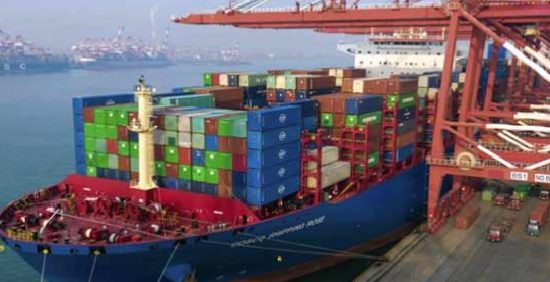

Indigenous shipowners have identified high financing costs, perceived investment risks and regulatory bottlenecks associated with the Nigerian Maritime Administration and Safety Agency (NIMASA) and financial institutions as major factors limiting their competitiveness.
The President of the Nigeria Shipowners Association (NISA), Otunba Sola Adewumi, stated this in a goodwill message at the annual summit of the Shipping Correspondents Association of Nigeria (SCAN) held in Lagos on Thursday.
The summit was themed, “Low-Risk Capital for Indigenous Shipowners: Overcoming Regulatory and Financial Bottlenecks.”

Adewumi said access to affordable, long-term financing remained a major obstacle to the growth of indigenous shipping in Nigeria, despite the capacity, expertise and ambition of local shipowners to contribute meaningfully to the nation’s maritime economy.
He called for a predictable and transparent regulatory environment, innovative financing mechanisms, effective risk-sharing frameworks and stronger collaboration among government agencies, financial institutions, development partners and industry operators.
The NISA President’s statement comes amid growing concerns over the delay in the disbursement of the Cabotage Vessel Financing Fund (CVFF) established to provide financial support to indigenous shipowners.
Adewumi said a stronger indigenous shipping fleet was essential to retaining more maritime revenue within the Nigerian economy, creating jobs, building local capacity and strengthening Nigeria’s participation in regional and international trade.
He reaffirmed NISA’s commitment to constructive engagement with regulators, policymakers and financial institutions to promote policies and initiatives that would make Nigerian shipowners more bankable, competitive and sustainable.
Also making a case for indigenous shipowners,Founding Partner, AOL, and Former President, Nigeria Bar Association, Dr Olisa Agbakoba, said regulatory uncertainty increases investment costs and discourages long-term financing.
To restore investor confidence and unlock critical funding, Agbakoba called for consistent enforcement of maritime regulations, transparent administrative procedures, clearly defined institutional responsibilities, and a predictable system for administering applicable waivers.
Agbakoba said that without proactive intervention from the agency, indigenous operators will continue to lose lucrative opportunities in coastal trade to foreign competitors.
He emphasized the need for effective coordination between NIMASA and key government bodies, including the Federal Ministry of Marine and Blue Economy, the Nigerian Ports Authority (NPA), and the Nigerian Ports Economic Regulatory Agency (NPERA).
He noted that only an aligned, transparent regulatory environment can ensure timely disbursements and empower local shipowners to drive the nation’s maritime economy.
Also, he stated that, “Banks and institutional investors must become active partners in developing Nigeria’s National Fleet. This requires specialized maritime credit expertise, reliable vessel valuations, technical assessments, and sound legal advice on ship mortgages, charter contracts, insurance, and cross-border enforcement.
“Financing should be tailored to each vessel’s commercial circumstances. A vessel supported by a credible long-term charter contract carries a different risk profile from one dependent on uncertain spot-market earnings.
“Commercial banks, development finance institutions, insurers, private investors, and export credit agencies should explore appropriate combinations of debt, equity, leasing, guarantees, and other financing arrangements,” he stated.
According to Agbakoba, the Cabotage Vessel Financing Fund (CVFF) remains an important instrument for supporting indigenous vessel ownership, but fleet development cannot depend principally on public financing.
He added that public financing should support viable projects and mobilize private capital, not substitute for a functioning commercial shipping market.
“The Fund should complement commercial bank lending, development finance, private investment, and cargo-backed financing. Its administration requires transparent eligibility criteria, rigorous credit assessment, appropriate collateral, clear risk allocation, effective monitoring, and recovery arrangements.
“The focus must shift from simply seeking money to acquire vessels towards developing viable transactions that connect cargo demand, suitable vessels, credible operators, and willing financiers,” he stated.
“Without dependable cargo, shipowners will struggle to attract capital. Without credible operators and effective security, lenders will hesitate. Without regulatory certainty, investors may decline otherwise viable opportunities.
“We must therefore move beyond asking, “Where will the money to acquire Nigerian vessels come from?” and ask a more fundamental question: “Where is the cargo and commercial opportunity that will make Nigerian vessels financeable?” he stated.
More to read
NPERA to introduce annual Honesty Award for MAN Oron cadets in 2027
CVFF funds converted to naira, not held in dollars- Ex NIMASA DG
Lilypond Customs boosts non-oil exports by 22.14% in Q3