


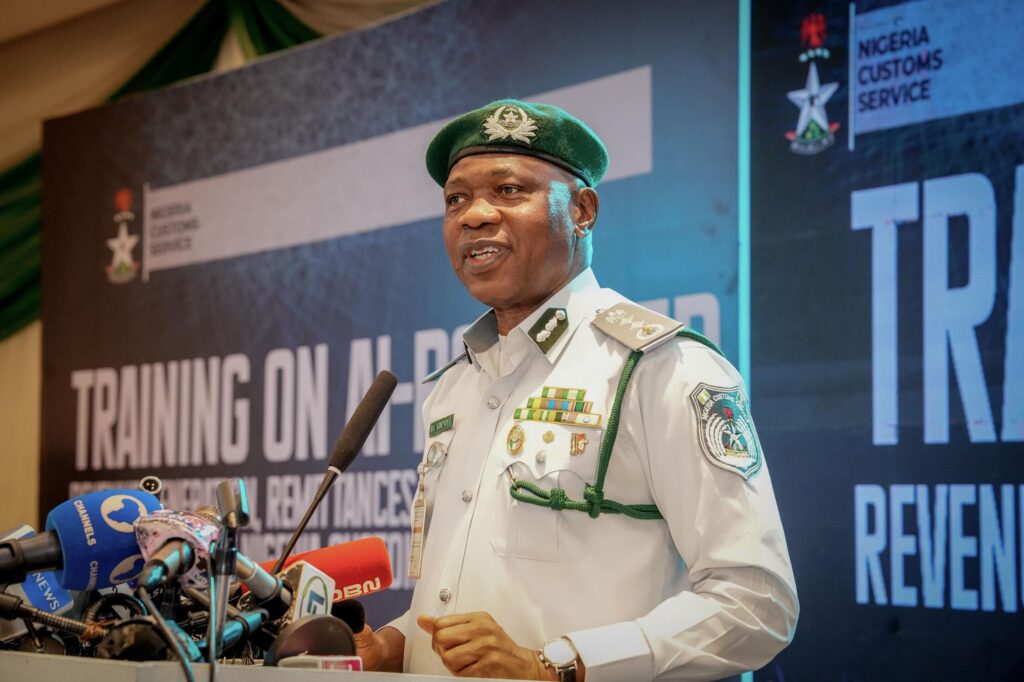

The Sea Empowerment and Research Center (SEREC) has stressed the need for legislative backing for key Customs reforms being implemented under the leadership of the Comptroller-General of the Nigeria Customs Service (NCS), Bashir Adewale Adeniyi, noting that such legal support is essential to ensure the reforms are sustained and not eroded over time.
In a summarized executive press brief issued by its Head of Research, Fwdr. Eugene Nweke, the centre warned that reform initiatives must outlive leadership tenures and be firmly institutionalised to prevent policy reversals and institutional regression.
SEREC recalled the 2014 doctrine of legacy and continuity articulated by former Comptroller-General Abdullahi Dikko Inde, which emphasized building enduring systems that successive administrations can strengthen rather than discard.

The centre noted that the NCS has recorded significant progress in digital modernization, revenue generation, enforcement, and stakeholder engagement, but cautioned that these gains remain vulnerable without strong legal and policy continuity frameworks.
Describing the Customs Service as a “relay institution,” SEREC said each administration must strengthen inherited reforms instead of resetting them, stressing that sustainable reform must be institutional rather than personality-driven.
On leadership, SEREC underscored the importance of sustained professional, career-driven management within the Service, warning that deviations from this model in the past had led to disruptions and setbacks.
The centre commended Adeniyi and his management team for advancing modernization and aligning with legacy reform principles, urging that these efforts be fully institutionalised for long-term impact.
SEREC also identified the emerging cadre of Customs officers as critical to sustaining reforms, noting that they must serve as custodians of institutional memory, drivers of continuity, and stewards of professionalism and national service.
It further urged that the reform trajectory of the Nigeria Customs Service be adopted as a model for other government agencies, particularly in policy continuity, digital transformation, and institutional accountability.
To safeguard ongoing reforms, SEREC recommended legislative backing for key Customs initiatives, accelerated implementation of the National Single Window, establishment of independent reform audit mechanisms, strengthening of institutional memory systems, and deepening of digital transparency tools.
The centre concluded that the true test of reform lies not in its initiation but in its continuity, warning that Nigeria cannot afford policy reversals or institutional inconsistency.
More to read
Customs pledges support for Nigeria’s $1tn economy target
MWUN PG Bunu celebrates Adeyanju on birthday, hails contributions to labour movement
After revenue, export gains in Ogun I, Afeni takes over Customs FOU A